[00:00:00] My lovely people, there's something I've been thinking about lately and I thought I'd share that with you and bring a cool guest with me along to this episode. You can look at a pipeline and everything seems fine. Now, the numbers are there, the opportunities are slowly progressing as long as you think there are anywhere, the deals are there, but you still don't fully trust it and you want to know because you don't actually know what's happening.
[00:00:30] What's behind it? What's real? What's stuck? And what's likely going to be falling apart? On the B2B Sales Trends podcast, we give you a sneak peek into the strategies of the world's best CROs and go-to-market leaders, the systems and playbooks they're using so you don't have to figure it out the hard way.
[00:00:50] Anyway, so if you want to increase win rates, shorten sales cycles and learn from the best in B2B selling, this podcast is for you. We are getting today into how top teams actually measure performance across the full funnel and how that changes the way they coach, forecast and how they win.
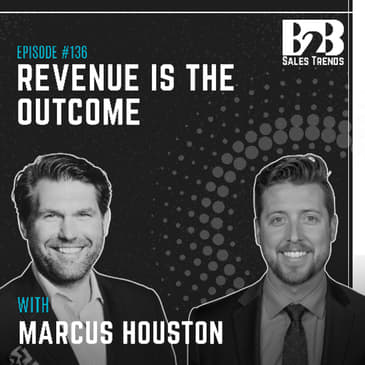
[00:01:11] My guest today is Marcus Houston. He's the SVP of Customer Growth and Development at Transportation Insight and I'm super excited to welcome him to the show. Marcus, welcome to the B2B Sales Trends podcast. Thank you, Harry. I appreciate it. Really excited to be here as well. Great. Marcus, give us a little bit of context about yourself and your background, if you would mind.
[00:01:36] Yeah, so Marcus Houston, lead sales and revenue at Transportation Insight. Our main focus is really around supply chain. Think 3PL, 4PL type models and just driving solutions that can help our customer base with efficiencies within their day-to-day operations. From procurement to technology to audit, you name it. Background for me is really 15 plus years in this space.
[00:02:03] You know, I always joke, you never think you're going to end up in supply chain, but once you get there, it just kind of sucks you in. I've spent time both on the consulting and the shipper side and just truly love like getting to know our customers and figure out ways we can drive value. And there's been so much change over the last decade and a half. And I look forward to just kind of like unpacking a lot of that. And from like a revenue perspective with you today, Harry. Let's do it.
[00:02:27] Now, you're leading a pretty broad sales ecosystem, as you have shared with me prior to this call. Marketing, BDRs, sellers, enablement, basically all of it, right? Can you give us a quick picture of what that looks like today? Yeah, absolutely. So I like to refer to it as our revenue ecosystem. So as you noted, it's the full revenue ecosystem from marketing to BDRs to our direct sellers to our sales enablement team.
[00:02:54] At a high level, our marketing team owns our demand creation. They provide air cover for our sales team. Our BDRs convert that demand into qualified conversations. Then our sellers will take those opportunities and they'll carry it from business case all the way to close. And enablement really supports all those functions to make sure everyone on the team have the skills, the tools, and the content they need to execute. You know, similar for us, right?
[00:03:20] If we talk supply chain, if you have an operation, no one can reach their full potential if they all operate in silos. So for us, we want to make sure that entire sales ecosystem and that revenue cycle is operating on one system, not four separate functions. So from shared stages to dashboards to making sure all those goals are aligned. So they're marching in one direction day in and day out.
[00:03:46] And because of that, when we talk performance, we're talking about the integrity of the entire sales funnel, not just one thing or, you know, how much revenue we closed in the last month. And that's a nice prompt here because I think a lot of leaders still sort of default to that one piece, right? To that one number, to the revenue number, to the obvious one, right?
[00:04:08] At what point did you realize that that wasn't enough anymore and you have to create, you know, more and outside of that particular focus? Yeah, absolutely. So like most leaders or like most people involved in sales or the revenue side of the game, I grew up with revenue as the scoreboard, right? And while revenue does matter and will always matter, and it's something we're graded on, I couldn't help but, you know, a month closes and you move on to the next month. You hit your number.
[00:04:38] You're a hero. You missed it. You weren't. However, you know, what really changed for me was the scale and the volatility of everything. We started having quarters where the revenue outcome didn't match how healthy that myself and the other sales leaders really felt the business was. We'd hit a number, but it was carried by a few, I call them home runs or hero deals, larger deals. It helps you get to that number. Or we miss a number.
[00:05:02] And I would feel like sometimes in the months where we miss the number that actually the pipeline and the overall trajectory of our sales team was actually in a better place. So I quickly realized that, you know, revenue was more of a lagging indicator, not a leading indicator. By the time it shows up on the scoreboard, the real game was won or lost three to four months ago.
[00:05:22] So when I stopped being satisfied with what did we book at the end of every month and started asking what happened at each stage to get us there, that's where I really started to kind of get a feel for how can we dive deeper into the pipeline, not just bank on what's happening late stage when we win a deal. Because at that point it might be too late. Maybe you are unhealthy or lopsided at the top or the middle or the end of the funnel. That was really the eye-opening thing for me.
[00:05:47] You know, and we're at no better time right now, I think, in the history of being a sales leader with the technology we have access to to gain visibility to truly how healthy each stage of your sales funnel, your sales cycle truly is.
[00:06:01] So it feels like to me, and correct me if I'm wrong here, that the real game and the real want to play is to truly understand what's happening before the deal closes really and then build a system around it. What pushed you to start looking deeper into that issue, into that funnel?
[00:06:25] Was there a situation that happened that said, okay, I got to change this around or an event? Absolutely. So for me it was, let's say you start your first quarter and you blow your first quarter goal out of the water. And everyone's riding high, you're ahead of the curve, and then all of a sudden you get into Q2 and you're like, what's next, right?
[00:06:47] Well, at that point, if I start to really dive into, you know, why am I not having the same success in the second quarter as I had in the first quarter, it really came from two places for me. It was forecasting misses and stalled growth. We'd see really strong late stage pipelines, confident forecasts, but it seemed like you get to Q2 and it never, it didn't land the way we expected.
[00:07:11] So that really started forcing us to look back up the funnel and ask ourselves, are we qualifying well enough early stage? Are we progressing deals quickly enough? And then ask yourself the questioner, why are they dying on the vine? We broke it down. It was clear for us as the progression problem wasn't really at the very end. It was actually early stage. So are we going through the discovery process effectively enough? Are we qualifying these things? Are we asking the right questions to our buyer?
[00:07:40] Are we asking the right questions to our buyer?
[00:08:10] We're going to go on and develop the right key metrics to make sure that we were kind of firing on all cylinders as we advanced those deals through. When you went through this, right? Why were those deals dying? What were you seeing with those opportunities that are either dying early on or they're sort of progressed forward and die later in the sales process?
[00:08:35] What did you see there that happened that made you come to that realization? I think we were too quick to push them through the funnel. And the term I like to use is slow down to go fast at times.
[00:08:52] So were we doing an effective enough job in the interview or the discovery process early on to qualify and make sure we had everything we need and made sure we aligned our buyer with the buying journey of what they could expect in the coming days or the weeks? If we were aligned on that, we did an effective job early on. If we were in qualifying, we could really prove the value of the solution early on. So once it got to late stage, the rest of the deal almost took care of itself.
[00:09:21] And that's where I really felt like we were missing and made a very intentional effort. You know, no one's perfect, but make a very intentional effort to get better at it every single day. I always joke around when I say, you know, salespeople live in the land of hope, right? I hope that this thing comes through and I'm pretty sure that comes through and hope will carry me through the rest of the process.
[00:09:44] But the reality, and I completely agree with you, your early activities, the quality of your early activities in the sales process are the ones that determine is this thing coming through? Yes or no, right? Absolutely. Yeah. And, you know, we all have that gut feeling and that gut instinct. Yeah.
[00:10:06] And it's important, but also we can lean on historical trends and data and what happened to kind of check the gut as well and be like, is this really, you know, what's going on here? So like, let's really work on qualifying, make sure we follow the process and it pays dividends later on. So what are some of the key metrics that you actually use now today to solve what you have described as the issue just now? What are you using right now to solve the situation?
[00:10:34] So we really look at, we have six stages in our sales cycle and we look at aging within each stage of the sales cycle. We look at conversion percentage within each stage of the sales cycle. We look at ultimate win rates. So for me, right, if you look at aging, that a lot of times shows me how intentional the buyer is that I'm working with or the customer that I'm working with, how intentional they are.
[00:10:59] Are they matching my intensity or are they as serious about this opportunity as I am? And are they eager to get it moving forward and implement? Right. And then with that, how am I converting? So if I have 10 deals in my early, mid, late stage within my sales cycle, how many of those are actually continuing to flow through?
[00:11:19] Are there trends by vertical or by structure of their supply chain that we can lean in on and see, you know, are there more value add based on current events and what's going on in the marketplace right now for this specific vertical? Should we start targeting these and are they converting at a higher percentage? And then ultimately, what are the key indicators or what are we seeing from certain types of deals that allow them to win at a higher rate versus going close lost?
[00:11:47] And then we capture, Harry, at each stage of the sales cycle. If someone drops out or an opportunity drops out, what's the reason for that? Is it a preventable reason or is it something outside of our control? And then how can we learn from it and coach accordingly? And the first step, I wasn't sure if I get this right. Did you say aging? Like how long they've been basically sitting there? Exactly. So that's interesting, right?
[00:12:16] And we'll break it down one to seven days, you know, seven to 21 days, 21 days plus. And it's a lot of times, you know, hey, we followed up two to three times within this stage. And is the individual returning my calls? Are they agreeing to calendar meetings? Are they responding to my emails? Right. So that's a key metric for us through each stage of the sales cycle. Like, you know, time kills all deals, right? That's the I guess that's the sort of the thinking behind it. Absolutely.
[00:12:46] And, you know, not to get too in the weeds, but like even think late stage, it allows you to learn, right? Like, is what I'm asking them to do too much? Is my contractual terms confusing? Is there things I can do to simplify those things to make it easier for them to go ahead and move the ball forward, experience solution and see the value there? We can learn from all these things based off what we're seeing on how long a deal spends in each stage of our sales cycle. Right. Love it.
[00:13:15] And what did you begin to see that you couldn't see before after implementing that? For us, we especially capturing the reasons on why. That was very important, capturing those within our CRM. We started to be able to be very surgical. And again, we know there's some things outside of our control. We can't always control what's going on in the global economy or the global market. You or I can't, we can't fix that necessarily.
[00:13:42] However, there are some things within each of those stages that we can fix and we can learn from. So we started to do real close in coaching on those reasons why within each stage of the sales cycle of how we can improve. And how did that coaching piece change the way you develop the team to have also, you know, the discipline of executing that process?
[00:14:12] Because it's one thing really to understand it intellectually. It's another thing to say, okay, my people are now executing it and coaching comes in and that's a strong piece and an important piece. How has that changed the way the team behaves with the process?
[00:14:31] So what we found is prior to gaining this level of visibility and really looking at each stage of the sales cycle from a coaching perspective, if you were deemed successful for closed business, maybe you won a couple of those hero deals. And it was masked by the fact of your revenue number when in reality, a year from now, I could, you could be set up for failure because your actual overall pipeline is it healthy? By gaining visibility to each stage of the sales cycle?
[00:15:00] Now I could say, hey, one of my best sellers who closes and meets their revenue goal for the last two years, maybe they're actually struggling in the prospecting stage. Or maybe they're struggling in the solution, design, development stage. Or maybe they're actually struggling in the late stage, but they've been the beneficiary of a team sell or a subject matter experts that helped them bring this across the finish line.
[00:15:22] I'm a big sports fan. So if you ask me, Michael Jordan, Tiger Woods, Roger Federer, Lionel Messi, all these people, while they're the best at what they do, I guarantee you they're competitors. And if you ask them, there's always something that they want to practice and prove on and work on. However, there's been a very intentional coach somewhere along the way that's helped them get better. So from our sales leaders perspective, you may be hitting your revenue numbers right now.
[00:15:48] But if I can gain visibility and you can gain visibility into your pipeline, how you're converting, how you're winning, you'll see where you may be struggling in certain stages. And now you can start working on your craft to improve there and then exceed well beyond the limits of what you thought were possible. So that was the biggest unlock for us is getting away from the broad paintbrush approach of this person's been successful. I'm going to leave them alone, let them do their thing and say, hey, do you really want to get better in your one on ones on a week in week out basis?
[00:16:18] Let's understand where you're struggling, where you're excelling. And then let's let the rest of this team see if you're doing really good at this. Maybe I can listen to some of their call recordings and see how they thrive. Maybe you're struggling here. You can listen to another team members call recordings and seeing how they're they're succeeding here at this stage of the sales cycle. So it was it really allowed us just to be more surgical and intentional in each stage and make our sellers the best version of themselves because of the additional detail that we could get with into the sales cycle.
[00:16:47] And that's all structured on the KPIs and the different stage gates. Love it. Love it. And the good people will really be open for that for that coaching that and they want to want to improve. And and the people who are on you, you don't really want them on your team anywhere. Right. That's right. So I've seen teams get very focused on what's about to close.
[00:17:14] That's typically the deal review piece and they're really neglecting what's coming next. Why, in your opinion, does that happen? I think. Again, a lot of the incentive is tied to how much business you close in most organizations. Therefore, human nature is to go to how I get paid. Right. However, when you close that deal, what's next?
[00:17:43] So late stage deals are allowed. That's what gets presented to the board. That's what gets talked about on the forecasting calls. However, no one thinks about once that deal closes, they're on to the next one. What did it take in the first place to get that deal there? It's top of the funnel activity. It's the prospecting. It's how intentional and disciplined you are with that. That's the stuff you do kind of when no one's looking.
[00:18:07] Um, and it's so easy to hyper focus on this late stage deal and didn't getting it across the finish line. You and I both know how many emails or conversations are you actually having on a day to day basis of those late stage deals. But you hyper focus on them. You're spinning your wheels. You waste your time. You could be actually spending that time nurturing deals and solutions design. You could be spending that time getting creative with your outreach and opening new doors to add to the top of the funnel.
[00:18:35] So I feel like if you don't deliberately manage that and you don't keep a very intentional focus and structure your days accordingly, it's really easy just to focus on. I've got to win this deal. I've got to win this deal. I've got to win this deal instead of thinking about what's going on top of the funnel. Am I healthy across the board? And I think it's our job as sales leaders to make sure they're incentivized to drive that behavior as well, because you want to make it easier for them to do the right things and the wrong thing.
[00:19:01] So, you know, I'm trying to challenge myself and the rest of our sales leadership team to say, hey, how do we incent prospecting middle of the stage efficiency and late stage so we don't constantly get stuck in this grind of having to fix it before it's, you know, after it's too late. Yeah. Love it. Let's talk a little bit about forecast accuracy. I know you touched earlier on that. And forecasting is where all of this really shows up, right?
[00:19:27] And I can't tell you how many conversations I have with clients on this podcast that people say forecasting is a huge issue for us, right? Where do you typically see the biggest gaps between what sellers think will close and what actually happens? To your point, I referenced a little bit earlier. I think technology can make us as effective now as sales leaders as we've ever been. I think that seller's gut feeling is very important.
[00:19:55] But now with AI and machine learning and large language models, we can actually bring those alongside our CRM and say, hey, I know the seller says I'm 90% likely to close this deal. Every deal has similar trends and things that happen. You can bounce that off and say, how likely am I actually to win this deal based off the last two years of deals that have closed? What are similar characteristics? Where am I gapped and where am I missing?
[00:20:23] So for us, what we're looking at is, am I three wide, three deep? Meaning do I have three executive level contacts? Am I working down within the organization so they buy in? Am I in communication with them frequently enough? We talked about aging and how long, how many days these deals are spending within each stage of the sell cycle. What trends are going on there? Is it moving through at the right level for me to feel confident that it actually is going to close them in the next one week, two weeks, three weeks, four weeks?
[00:20:49] So for us, it's leveraging that human feeling, which is very important, but also bouncing against the data using our CRM, using our technology tools that are at our disposal to help them come together and say, is their gut feeling really aligned with probably what's going to happen based off what we've learned in the past? What does great look like? That's always the question in this, right? So if we looked at one of your, let's say, strongest sellers that you have, how would they
[00:21:18] operate differently across the funnel now you've implemented that system? Absolutely. So I would say our best sellers, they don't just chase deals. They run a very efficient system. At the top of the funnel, they're incredibly consistent. They protect prospecting costs. They partner tightly with their partners in marketing, their BDRs. They know exactly how many qualified opportunities in each stage they need to stay on track, right? For their annual goals or exceed those.
[00:21:47] In the middle of the funnel, they're very disciplined about qualification and progression. They have multi-threaded relationships. We talked about free wide, free deep. They have bias towards moving a deal forward or making sure it stays there or just moving on from it. In late stages, they're honest with themselves and with the buyer. I think they ask themselves, they almost interrogate their own deals. Is this real or is it not? Does it have substance to it? They know their conversion data. They know how they need to improve.
[00:22:17] They'll also ask the buyer. Harry, you and I have talked about this. I'll ask the buyer, are you ready to sign? If so, let's get it done. If not, my time's valuable. Your time's valuable. Let's both move on to something that makes the most sense for both of us. And I think the common thread is they own the entire funnel. They don't outsource top of the funnel all the time to marketing. They take ownership of that as well. They don't outsource the top of the funnel to the BDRs all the time.
[00:22:44] They leverage them, but they also want to be intricately involved in it. And they're willing to respectfully challenge a buyer who's serious enough to make something happen. That's the one that I love the most. It's like, you know, look the person in the eye and say, are you ready to move forward? If not, let's go our separate ways because I have something that can drive a lot of value for your business. I believe that. Everything you described, Marcus, makes a lot of sense. Makes a lot of sense logically.
[00:23:11] And I will politely challenge something because most sales teams then don't operate that way. There's always a disconnect, in my opinion, between the theory of a system to what gets executed. What can people listening to this learn from your response there and from what you've been saying in your experience?
[00:23:34] And what has to change in how people think for this to really stick and be executed in the right way? Sum this up for me. I'm trying to think of the best way to say it. To me, it's shift from being obsessed with the outcome and be obsessed with the system. And what has to take place on a day-in, day-out basis. If you're obsessed with the system, you never lose sight of all stages of the funnel.
[00:24:02] If you're only obsessed with the outcome, it's easy to lose sight of certain things and have blind spots. You or I, neither one are saying that revenue is not the ultimate goal. But what does it take to get that revenue? Right? And the result of a well-run funnel and a well-run system allows us to achieve the revenue goal, but make sure we're hitting our numbers quarter in, quarter out, month in, month out, and we don't have those downturn quarters or those downturn months. Yeah.
[00:24:32] Marcus, you've been an amazing guest. And my last question on every single podcast is, what, in your opinion, are the top three traits, skills, behaviors that define top B2B salespeople today? I would say business acumen is critically important. Systematic discipline. And then I'll group this last one together.
[00:25:00] Honesty, coachability, and courage. That's just so important to me. So acumen, systematic discipline, and then honesty, coachability, and courage. That's what you preach day in, day out. I absolutely love those three, and I couldn't agree more with you. You know, buying has changed dramatically. And if you don't have one out of these three things, you have an issue, right?
[00:25:27] And so executing these three, what you have described, I think are absolutely vital to be a top B2B seller. Marcus, you've been a tremendous guest. I know our listeners will love your input, your thought leadership, and tips and tricks that you have shared. So thank you for taking the time to be a guest on the B2B Sales Trends podcast. We appreciate it. Thank you, Eric. I appreciate it.
[00:25:53] My lovely people, what I take from this conversation with Marcus is, if you can't see what's actually happening inside your pipeline, you are left guessing. And the moment you start seeing it clearly, that's when you can actually coach, forecast, and improve seller's performance. If you got value from this, on this episode, follow the show, share it with your team, and subscribe on the YouTube channel
[00:26:22] or wherever you get your podcasts from. And before you go, my lovely people, we've just launched something really cool that you'd be excited about. It's called the Revenue Accelerator. It's designed to give you a clear, structured view of where revenue is actually being won or lost across your pipeline. Not just at the end, but across the entire process. If you have ever looked at your numbers and felt like something doesn't quite add up
[00:26:52] or you have a sense you might be leaving revenue on the table, the Revenue Accelerator will show you where to look and what to focus on. It's free. It's in the show notes. Download it. Check it out. It's a really cool tool and gives you great insight. We always put together, also put together a short white paper called, You're Entering the Deal Too Late, based on the patterns that we see across sales teams and real deals in the market. Both are for free. Links are in the description. Enjoy.
[00:27:21] Until the next time, my lovely people, take care of yourself, your loved ones, and of course, your B2B customers. All the best. Bye-bye. Bye-bye.