[00:00:03] A lot of sales advice focuses on creating urgency. We need to win deals faster. We need to win them bigger. But what if urgency isn't really the problem or the issue? What if the buyer already knows they need to change? They're just not convinced yet that they will be successful doing it. That's the question.
[00:00:28] On the B2B Sales Trends Podcast, we give you a sneak peek into the strategies of the world's best CROs and go-to-market leaders. The systems, the playbooks they are using so you don't have to figure it out the hard way. So if you want to increase win rates, shorten sales cycles and learn from the best in B2B, selling this podcast is for you. Today we're talking about the other side of urgency, which is helping buyers feel safe enough to act.
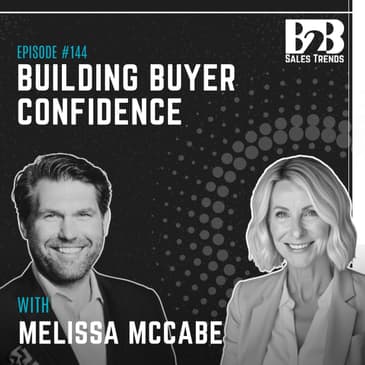
[00:00:57] And my guest today is Melissa McCabe. Melissa is the Chief Sales Officer at Una Solutions. Melissa, welcome to the B2B Sales Trends Podcast. Thank you, Harry. It's a delight and honor to be here. Let's set the scene a little bit, Melissa. Share with us a little bit about yourself and how you help your customers achieve their outcomes.
[00:01:22] So me personally, I am a career seller and sales leader, always having been in the customer-facing solution selling space. Now going on 27 years, hard to believe. And started my career at IBM, was just so fortunate to have incredible solution sales training there.
[00:01:46] And from that strong base, have been able to go and pursue opportunities to lead at smaller companies, more specific applications and industries that those companies serve. And so presently, as you mentioned, I'm five months in being the Chief Sales Officer at Una Solutions.
[00:02:09] And Una is just a very exciting culmination or triangulation of the things that I'm passionate about intersecting with my career and my skills. So it's a delight to be here. Una is a software company that serves public sector, primarily GovTech, as well as education, tribes, not-for-profits.
[00:02:36] And we're based in North America. So we serve the North American market with dual headquarters in Oakville, Ontario, and just outside of Atlanta, Georgia. So I love it. When people think about their competitors, they usually think about another vendor who is providing a competitive solution to them.
[00:02:59] But in a lot of complex sales environments, it feels like the biggest competitor is often the current situation or the status quo, to refer differently to it. Why do so many opportunities stall even when the buyer agrees there is a problem worth solving, in your opinion?
[00:03:18] Yeah, so certainly in public sector or what we consider B2G sales, it feels like stakes are maybe higher than they've ever been before. Whether it's the geopolitical or economic environment or the complexity of our personal lives.
[00:03:40] There seems to be more happening for not only our own employees and sellers, but also the prospects and the customers that we work with. So everything else that I say, I think is amplified by the fact that something's different about right now. And even within that, it presents opportunities to positively and consultatively differentiate.
[00:04:08] So you mentioned we're competing with status quo. And this is very much the case in public sector because think about it. Every move, investment, risk that our customers, whether they're agencies or educators, tribes, nonprofits, as I mentioned, make is subject to transparency laws.
[00:04:36] And so it's critically important that they feel confident, understood, supported, and that we've helped them look into the crystal ball and see a successful future once they determine that problem that is worth solving can be done successfully with the approach that we're bringing to the table.
[00:05:01] So it's, I'm sure complex in the B2B world as well. And I would say in the B2B space, that transparency and, I mean, just imagine everything that we did and every move that we made was really available to be viewed, inspected, voted on in some cases, and talked about by large numbers of constituents.
[00:05:31] So there's an extra degree of responsibility that our prospects and customers face. In the sales space, there's a lot of conversations around we have to win deals faster, right? We have to create opportunities faster. Everything is about win deals quicker. Now that suggests that urgency piece to it.
[00:05:56] And a lot of sales advice focuses around creating that urgency with maybe in a B2B world or in a B2G world. But one thing that stuck with me is that buyers aren't just weighing the risk of staying where they are. They're also weighing the risk of moving forward. How should sellers think about that balance?
[00:06:20] Certainly, we've got an opportunity as sales professionals to, first of all, listen and empathize. And once we've done that, and I mean truly do that, right? Do our homework, understand the individual that we're speaking to or the set of individuals, and whatever is available about other investments or decisions that they've made, strategic priorities or plans.
[00:06:50] And again, in B2G, because of transparency, we're able to access a lot of that information. So it starts with being prepared. And then from there, the onus is on us. I tell my team this frequently. We are the experts. We are the ones who serve this market and have hundreds, and in some cases, more than a thousand case studies or patterns, if you will,
[00:07:20] of success in this type of initiative or this type of problem that our prospect is facing. Our prospects, they do this work. They might have been in seat for a thousand years, 20, sometimes in excess of 30 years. And although they can attend conferences and network with their peers and certainly do their own research, I have a great respect for our prospects.
[00:07:46] They simply don't have the point of view that we have to offer. And so it's harnessing that clarity, owning that perspective, and believing that we've got a pattern or a set of patterns that can likely apply,
[00:08:09] and being clear about that and offering those, you know, as reading material or an in-person chat, perhaps at the next conference or even a virtual interview with someone who's on the other side of that type of initiative. When we can do that with clarity and with that great sense of responsibility, I feel that we build the confidence on our prospect side,
[00:08:35] and that contributes to the pace at which they're willing to move. So it's really about instilling that level of confidence that whatever risk you take in here, we will be by your side and guide you through this process effectively. And you should really be an advisor to them.
[00:08:59] And you framed it around being the expert in what you do and your people and what they do. So it's really about how do we help you achieve your outcomes and that framing around that. It's interesting. A lot of organizations these days, the people that make those decisions, in a way held accountable for the outcomes of their decisions, right?
[00:09:29] How does that change the way buyers evaluate opportunities? Yeah, it's certainly prevalent again in the B2G market. But look, all of my time at IBM was focused on the commercial space, and I've been kind of everywhere in between. So I know that there's more in common than less across sectors and industries.
[00:09:50] But I would say decisions can feel risky for a prospective buyer because the pressure is high. Again, there's this speed at which and acceptance around individuals commenting and evaluating each other publicly and privately.
[00:10:18] That, look, maybe it's always been that way, But it feels like our business world sometimes emulates the personal world. And folks just talk more. Folks just feel more empowered to understand, evaluate, expose, celebrate, and sometimes denigrate the work that others do.
[00:10:47] And I'm very empathetic around that condition for our buyers because they're placing a bet. They're placing a bet on a solution. They're placing a bet on the vendor that offers that solution or the combination of vendors and perhaps system integrators. And they have to rapidly grow to trust a number of individuals very quickly in order to ultimately bet on themselves.
[00:11:14] And I say bet on themselves because they are the decision maker. They are the individual or, in some cases, the group that can say, We're capable of pulling this off and being successful. So what actually now gives people the confidence to move forward? You've mentioned in the process things such as empathy and making sure you handhold people through the process and so forth. What gives them the confidence to actually move forward?
[00:11:42] Lately, we've been thinking and talking a lot about moving some steps that were behind a sales process, you know, a discovery call. And then it's real routine, right? You go from that to sort of solutioning and then maybe doing a demonstration and proving value. And then ultimately offering a price or a proposal.
[00:12:07] We've thought about what we can do to move that transparency around the investment that might be required, the length of time or resources that it will take to truly be successful and get to the outcome that they want. Or other elements of how we work further ahead, even pre-sales process.
[00:12:30] And we can do that by doing a great job of exposing details about our solutions and the way that we work to large language models and through other media outlets and sources, including conferences and prospect events, so that our buyers and prospective customers can do research on their own.
[00:12:56] And really equipping them to come to the opportunity to meet with us more informed and more targeted about what they need to understand in order to be confident moving forward. You know, it's interesting. You mentioned that buyers and customers are much more informed nowadays. days, they have a lot of access to different information and so forth. And so do sellers,
[00:13:24] of course. What separates preparation? And I heard this the other day, which I thought was interesting. What separates that preparation that builds trust in the process from the preparation that makes the buyer feel that we're pushing them towards something? What's the difference? Yeah, it's a great topic because I have, anytime you've been in sales leadership for as long as I
[00:13:51] have, you get an opportunity to see a wide spectrum of talent. And what I'll say is the difference is the mindset that the seller brings, which is often a mirror of the mindset that the sales leadership and company leadership ring. So if I teach my sellers, the knowledge and the preparation that
[00:14:17] you gain is to be used to rapidly move a prospect to the answer that's in the envelope. And the answer that's in the envelope is us. That mindset is going to show up in the way that my team operates. If instead, my instructions and my company's belief is, we are going to come alongside this
[00:14:42] prospective agency or nonprofit or higher education institution that has dozens of priorities and pressures going on at this time. This is just one of the things that they could prioritize and decide to solve. We treat ourselves as brokers of an incredible set of resources. And it's our
[00:15:06] responsibility to prepare and to meet that prospect where they are, to empathize, and to provide them clarity so that they know how to evaluate the opportunity to solve this problem that we can help with maybe versus other problems that they could solve. And so our ability to be clear and consultative,
[00:15:32] not only at the beginning, not only at the end, but throughout is the difference, I believe, in creating a sense of urgency that feels right to the prospect versus one that feels like rushing them to some decision that they can't really sit with and be confident about.
[00:15:58] I love the brokers of resources that you've mentioned. That's a nice term and really a good description of how people should behave in the sense that you have just described and provide customers that clarity and help them towards a decision.
[00:16:22] Well, look, and it comes from a place, Harry, where I've been new to companies several times since this tranche of my career that I started at IBM. And each of those times, but probably never more so than right now with Una, fresh eyes on the organization and the resources, literally from
[00:16:47] development to our finance team, to our marketers, to of course, my own organization in sales. It's astounding how dedicated and how prepared these people are to assist our customers. And so it is humbling. And I say that broker of a set of incredible resources because they really are.
[00:17:12] And as sellers, one thing I'll add is I tell my team, you're competing with your colleagues to get an assemblage of those incredible resources that we can offer in front of your prospect. That in and of itself is a great responsibility because this set of resources is limited, right?
[00:17:38] And so let's do our best matchmaking job, if you will, to make sure that everybody who most needs it at the right time has access to those resources. I really like the fact that it sounds to me like that you're really empowering your sales force. Is that a good description? Now, probably more than ever, because you talked earlier about tools and the ways that they can do
[00:18:06] research and prepare themselves. The environment that I'm in now, and I can't say that it wouldn't be like that if I was somewhere other than Yuna. It's just astounding. I feel like sometimes when I see how quickly and thoroughly my sales team can prepare for an opportunity or a meeting, I said, sometimes I feel like I should write a check back to IBM because I was so slow. And at the time,
[00:18:33] I wasn't slow, but I feel like it took me maybe three months of, you know, working with and asking questions and reading up about a prospective customer, which now we can determine in 15 minutes or less. So we've empowered them on multiple levels, Harry. One is, of course, the tooling that's available to them now because we've made those investments. And then, yeah, empowering them to harness their
[00:19:02] individuality, their own intelligence, their own ability to be empathetic and consultative, and to match those two together to do great work. Love it. One of the things that I know you've been focused on, Melissa, is improving win rates. And a lot of people at a senior sales leadership currently are. Obviously, how do we improve win rates? How do we win
[00:19:27] more opportunities? When you look at organizations trying to solve that particular challenge, where, in your opinion, do they tend to look first and where should they be looking instead? There's a lot of opinions out there. I'm curious to hear about yours. Well, it's a great topic and you're right. I think we're all thinking about that right now and trying
[00:19:50] to diagnose. When I look at win rates, I work closely with my revenue operations team to bifurcate out win rates that are associated with competitors, win rates that are associated with ultimately a customer or prospect deciding to stick with their status quo, and then win rates more globally related to
[00:20:17] opportunities being qualified or not qualified. Okay? So I have observed in my own current organization that it's necessary to go more fine-grained on the topic of win rates because it's very easy for us to assume one reason and to be wrong. So I think as a sales leader, being a student of the data
[00:20:44] and really sitting with it and asking even deeper questions is a way to make sure that you understand the problem that you're solving in the first place. Okay? So with that said, I'm known for saying that sales is an all-company outcome. And I mean it when I say that as a sales leader or as a salesperson,
[00:21:08] but probably more so as a sales leader, big part of my job is to help the rest of the organization, my peers, understand what my team needs from them. And maybe it's related to the offering, you know, the scope of the offering. Maybe we're trying to go down market or conversely up market,
[00:21:33] and we need to have a different type of implementation service offering or different level of training offering. Maybe it's the events that we're showing up at and where we are versus where we need to be. So I like to, as a sales leader, take a very broad view on the functions
[00:21:57] that are contributing to the lagging indicator, which is bookings, right? Because that's all it is. It's a lagging indicator of how the rest of the organization has assembled themselves in order to win. And when you're working in a space like mine, where our sales cycles tend to be on the longer side,
[00:22:23] sometimes we have solutions that can sell in three to six months. Other times it's an 18 to 30 six month project associated with an ERP, for example. It's really important that we take a fulsome look at the contributing factors that are allowing us to win or conversely contributing to a depressed win rate.
[00:22:47] It's interesting. When you talk about win rates, there's tend to be a number of different buckets that people are focusing on, right? Pipeline quality is an issue right now that a lot of sales leaders are looking at and they are saying, okay, good. If we need to improve our pipeline quality, we need to
[00:23:16] improve our leads, our prospects that go into the pipeline. In other ways, this is why a lot of deal qualification tools are now coming on to people's sales process to say, okay, we have to qualify the opportunity. So we improve the pipeline quality. So do you agree with that?
[00:23:42] That pipeline quality is a key issue at this stage and it's always been important. Don't get me wrong, but is it more important right now? And how do you deal with that in your organization? Yes, I agree that pipeline quality is more of a prevailing theme and topic that sales leaders
[00:24:11] think about and think about in concert with their chief marketing officer, their demand generation, ABM folks, and even customer success teams. So yeah, it's something that we focus on really in a dedicated way here at UNO. And one of the reasons for that is because again, there's more signal.
[00:24:36] There's just more signal coming from the tooling that most of us have invested in to try to understand our market. And I don't know too many teams that are expert level at understanding exactly what signals
[00:24:57] and at what altitude contribute to the most reliable intent to buy signal. So I would say we're spoiled for choice in terms of deal qualification methodologies, as you mentioned,
[00:25:20] and also tools or telemetry that we can have on our market. But the expertise that it takes to understand how to pull those things together and really say, okay, I'm satisfied that we've got quality pipeline coming in the door. I don't know any hack other than some time, right, to commit to
[00:25:46] a set of tools, commit to a ranking or a rubric on how to treat various signals that may be coming in, and then watching it and calibrating over time, but not having this knee-jerk reaction and saying, well, we're going to change everything because watching this for three months shows that it, pipeline quality is decreasing. I think it takes a little bit more time, at least in the space that
[00:26:15] I'm serving right now. Yeah. And, and, and obviously then qualifying your deal is one thing, right? But you can't qualify a deal to a close, right? So this is sort of one of the early steps to get pipeline accuracy, um, uh, and forecasting, right? But then still the sales organization has to take these opportunities then and drive them strategically to a close step-by-step.
[00:26:46] Um, one of the, the more interesting developments in the sales leadership space right now is the sort of the ability to analyze almost everything, right? Analyze conversations, emails, deal activity. At scale that simply wasn't possible a few years ago. Is that really helping or is it creating too much noise?
[00:27:10] I think it really depends more than ever on the collaboration between the revenue operations function and the sales leader. And I say that because at UNIT, I'm spoiled for having a very
[00:27:29] smart, scrappy, energetic, and innovative team that has taken our ability to take signal or input from deal recordings, meeting recordings, other intense signals, and put them into a system of action for
[00:27:54] marketing. And for myself and for my team that isn't overwhelming. I mean, look, it still can be overwhelming, but they're continually asking for user feedback and recognizing, Harry, the one thing that is unique about this team is recognizing that they can serve up insights all day long, unless I and my team
[00:28:20] can use it and feel good about it and feel empowered by the information that we can trust it. It's all for naught. Yeah. Yeah. And one of the reasons why sales leaders are using these tools is essentially to make sure that their organization is scaling, right? It's scaling effectively because it becomes harder that everyone is
[00:28:46] telling the same story with the same consistency and articulates value the same way. Why does this consistency, first of all, matter so much when trying to improve rates? Well, for my organization, it matters for a few reasons. I don't know how common they are for everyone
[00:29:08] else, but we have a number because we're growing a number of new sales team members. When I say a number, I mean more than 20, including leaders. And Yuna is a company of companies, right? We grew through acquiring
[00:29:28] and assembling a portfolio. And the sales challenge of those smaller companies is different than us as a portfolio company, where expertise in an individual solution and exactly the challenges that that solves doesn't go away. But we have sellers now whose responsibility it is to work with and understand
[00:29:55] the territory, like a geographic territory or segment of our market. And the concept of consistency is just so hard to monitor and implement. So that's probably why you're hearing more about it, because it's hard. Because at the end of the day, it's people and people are hard.
[00:30:22] So whether it's new talent, career changers, you know, people coming in, we have a number of former practitioners, if you will, people that were our customers that have decided to come over and join, you know, our side of the desk, if you will. And there's a lot to learn. And we also care about having a unified
[00:30:46] experience for our customers and prospects. We want a prospect, if they're running an evaluation and they're meeting with eight vendors, we want to be memorable in the right way and distinctive and known for the way that we work. And so that level of consistency is not only hard, but even more important to achieve. Yeah, I fully agree. You know, consistency is as tough as us in an individual,
[00:31:12] being individual in our friends and family and our kids and so forth to make sure everybody's consistent, whatever they're doing, let alone scaling it through that behavior through a sales organization. It's tough, I agree, fully agree. Melissa, the last question on every single podcast that I've asked is always the same. And I'm curious to hear your response to that.
[00:31:35] What are, in your opinion, the top three skills and behaviors that define really top salespeople nowadays? Buying has changed. We know that you and B2G, but also have extensive B2B experience. What, in your opinion, are the top three skills and behaviors that sellers need nowadays? And if you can prioritize them even for us in first, second and third, that will be amazing.
[00:32:02] My answer to this would be the same today as if you asked me back in 2001 when I was two years into selling. The three things are preparation. We talked about that earlier in our conversation, Harry, but understanding that nobody is born knowing and understanding everything that's required
[00:32:30] to get through their day successfully. So preparation is the most important thing. Being willing to practice and practicing is the second most important thing. Again, we can prepare and some would say practice is a part of preparation. I call it out because
[00:32:54] I myself am guilty of this and I supervise many others who I think feel like, well, if I just read about it and type up the right emails and have AI look at what I was going to say and evaluate it and shine it up, then I'm ready. No. We need to get on Zoom or Teams, record ourselves, evaluate how we sound,
[00:33:21] our body language, how we look and what we say and then calibrate that against the meeting's objective. And then thirdly, this might sound kind of funny, have a life, have hobbies, love something outside of
[00:33:43] your work, love many things outside of your work because the fun thing about selling and why I tell my kids or encourage them to consider it and as a career path and their friends as well is because it is a profession where you can relate and just celebrate and enjoy the people that you're not only colleagues, but you're selling and working with.
[00:34:13] I've met so many people along the way. I've gotten my very best tomato gardening advice, some very sage parenting advice, tips about where to go on my next vacation and everything in between from my customers and my prospects. And so I think if you show up as somebody who can be interested in that and what the person behind the day job does and loves,
[00:34:43] then you can be that much more interesting and develop those relationships and trust. Kind of where we started the conversation. Preparation, practice and having a life outside your profession and be passionate about something and celebrate successes. I love it. And preparation and practice really links into nicely into that consistency that you require, right?
[00:35:08] I like the sequence and the flow of it. Melissa, you've been an absolute superstar. Thank you for your time. I know a community will very much appreciate your thought leadership to the topic. Thank you for your time. It's been my pleasure. Thank you, Harry. Lovely people. What I take from this conversation is that the best sellers don't just help buyers understand why they should change.
[00:35:35] They help them to believe they can successfully make that change through targeted preparation and consistency. For everyone who is listening and watching, if you're trying to get a clearer picture of where revenue has actually been won or lost in your sales process, check out our Revenue Accelerator. It's designed to help you identify where momentum is breaking down across your pipeline and where you may be leaving revenue on the table.
[00:36:05] The description and the link of everything is in the show notes to this podcast. If you received value from the great insight that Melissa has shared with us, which I'm convinced you have, follow the show, share it with your team and subscribe on YouTube or wherever you get your podcast from. Until the next time, my lovely people, take care of yourself, your loved ones, and of course, your B2B and B2G customers. Bye-bye.