[00:00:00] My lovely people, here is something most companies don't want to admit. The market has changed faster than their sales teams have. Buyers today, as we all know, are more informed, they're more skeptical, they're more prepared than ever. There's lots and tons of stats out there on this stuff.
[00:00:18] And a lot of sales organizations are still relying on outdated hiring profiles, outdated training and leadership models that simply don't scale anymore. Now, on the B2B Sales Trends podcast, we give you a sneak peek into the strategies of the world's best CROs and go-to-market leaders, the systems and playbooks they're using so you don't have to figure it out the hard way.
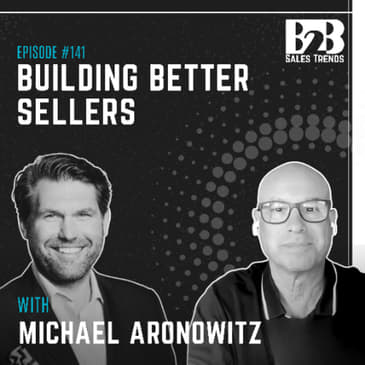
[00:00:46] So, if you want to increase win rates, shorten sales cycles and learn from the best in B2B selling, this podcast is for you. Today, we're talking about what actually separates high-performing B2B sales organizations from the one that constantly underperforms. My guest today is Michael Aronowitz. Michael is the SVP of Revenue Growth at VXI Global Solutions.
[00:01:15] Michael, pleasure to have you today with us. Welcome to the show. Thank you so much for having me and looking forward to our conversation today. Michael, give us a bit of an intro about yourself and about your organizations and what you guys do. Yeah, I've been doing this way too long over the past 25 years. You know, I've worked for, obviously I'm at VXI now. I've worked for Teleperformance, which is the largest outsourcer in the world. I've been on the other side with Centerfield Media, where we did marketing, performance sales. I've worked at eBay, Monster.com.
[00:01:44] I spent the last years doing performance sales and marketing. And, you know, as you said, the market is changing and sellers are not what they used to be. And if you want to be able to drive revenue these days, besides the tools, technology, and all the AI things that are out there, it comes down to people, process, and tools and technology. You've launched more than 100 sales programs, as I learned from you, across different industries and organizations.
[00:02:12] When you look at B2B sales teams today, what do you think has fundamentally changed about the environment they're selling into? Connecting to someone has become so difficult. You know, five or 10 years ago, you can pick up the phone, you can call someone, and they're at their desk. They would answer. The gatekeeper is really difficult. A lot of companies these days don't even give people desktop phones. They have mobile phones.
[00:02:40] LinkedIn, you know, we all get 5 to 15 messages a day through LinkedIn. Email doesn't work. It's hard to connect to someone, and it takes, you know, what normally took, you know, 1 to 3 touches. It may take somewhere between 8 and 12 just to get someone to respond back to you and say, hey, you know what, I'm not interested. So finding the right individual who can find different mechanisms through email, through voice, through LinkedIn, through social media,
[00:03:09] it takes someone who's dedicated to just getting that first meeting, which is really hard. And what's your secret on that? What would you share with the audience in terms of, here are two tips that your sellers should be doing to be able to get that one meeting? The first thing I would say is anyone these days who reaches out, you know, the first thing that they do is they do go to LinkedIn or see your social media. And who are you?
[00:03:38] Who's this person reaching out to me? And your LinkedIn profile, what you do, what you post, how you do it, is going to separate you from your competitors. So when someone reaches out to me through email or messenger or whoever, I go and see who they are, what they're doing, what their background is, and see if I want to connect with them. So the first thing is, what's your brand? And it doesn't matter if you're a BDR, an SDR, a VP, a CRO, what is your brand?
[00:04:06] The second thing I would tell you is, you know, you need to develop connections. Because in this world, if I want to speak to so-and-so, I can go in and see who they're connected to and have someone connect to connect. So again, it comes down to what does your network look like? You have to build your network. You have to build your brand. You have to be reliable. And you have to be an industry expert. We shared in this intro that buyers today have more information.
[00:04:36] We all know that. They have more options and more leverage, really, than ever before. And that really creates a tough spot for sellers. How has that changed what good selling actually looks like today, in your opinion? You could no longer just pick up the phone or write an email. You know, there's AI tools out there. We all know which one ever you're using. That's going to give you the history of the company.
[00:05:04] It's going to tell you their competitors. It's going to give you everything. And so if, you know, so-and-so company calls me up to sell me a cool AI technology or a tool, I can go into Gemini or Plexity or all these other ones and say, who is this company? Tell me about them. You could look at their reviews. You could look at their finances. So again, going back to, do I really want to do business with this company? What are their PR clips?
[00:05:29] In a matter of five to seven minutes, I can get everything on a company and tell me everything about them. And so from an industry standpoint, you better make sure when you're reaching out to someone that you've done your research to connect with that buyer. You can't just call up and say, can I get a meeting? So again, today you have all these tools in front of you. Before you do that first outreach, let's make sure that they actually are fit for your company and you know everything about them.
[00:05:59] And that's what sellers have to do these days. You know, it's interesting. A lot of organizations these days are blaming results on leads, on sometimes the pricing or how the current situation, the market conditions are at this present time. From your perspective though, the problems usually start much earlier, right? Where do most B2B sales organizations go wrong in this?
[00:06:29] The first thing is they hired the wrong person. Like think about what we just talked about in the last few minutes about how difficult this job can be. And what do they do? You know, they'll take someone who's done inbound sales for the last seven or eight years and say they have an enormous amount of experience. Wrong. I think that every B2B salesperson who truly wants to be successful needs to go out and spend a couple of days a week pounding on doors, going door to door and see what it's
[00:06:58] like to get, you know, your door shut on you 15, 20 times. People start, they hire the wrong profile. And it starts with, you know, when we hire someone, we use AI tools. We do skill evaluation tests. We do multiple interviews to see if they have the right DNA to do this job. I mean, think about if you made 150 calls a day and got to speak to three people. I mean, it's hard, right? And you have to have the mindset for that. So the first thing is the profile.
[00:07:28] Let's look at the profile of what's needed. How are they going to be successful? Way too many times sales managers, trainers think that if someone is coachable, you know what? Harry's really coachable. He could be coachable, but does he really want to do this job? So the first thing for success, you got to start out with Harry is finding the right candidate to fill the role. The second thing you need to do is the trainers.
[00:07:56] To me, the most important part of training is having someone who's done the job before. Not a PowerPoint trainer. We have a lot of PowerPoint trainers out there that, you know, they've been doing the class every three months and they haven't been out in the field in two years. The trainers that I see as successful training groups of individuals are ones that have done the job that can go out there tomorrow with you and do it. If they had to jump on a call, they can help you and manage you.
[00:08:25] Trainers need to be out in the field also. When I talk about a PowerPoint trainer, it's more than just selling, right? The trainers need to teach the individuals of what is going on there. And it's more than just selling. It's what I talked about having social selling skills, brand reputation, how to craft an email, how to craft a message, how to craft a LinkedIn post. There's a lot more to be to be selling these days than just teaching someone the product and the CRM.
[00:08:52] How do organizations know if they hire the wrong profile for their role? Is it as simple as, well, you don't hit your results by X date or X month into your tenure? Is it as simple as that? Let's look at it from an American football team, right? This year we have the draft. There's seven rounds. You draft seven players. You know out of those seven players, maybe four of them will make the team this year.
[00:09:19] When training camp starts, there's going to be anywhere between 80 and 90 different individuals, but only 53 are going to make the starting roster and another dozen are going to be on the practice squad. That's how you have to go into this, knowing that not everyone's going to make it. And you put the processes in place, but there comes a point where you got to pull the plug and move on. And just like sales, you know, not everyone's going to hit the conversion.
[00:09:45] The best recruiting team that I've ever seen in my life was a team out of Spain who they ran the recruiting operation, like a sales operation. They came in every morning with a huddle, who they're going to meet, who they're going to go out and who they're going to outreach. And you start to figure out what profile works and what doesn't. But you have to look at it that if I have an 85% throughput rate, I did okay, right? It's not about a hundred percent.
[00:10:11] You also need the data of what profile 30 days, 60 days, and 120 days was successful. And start looking at the profile of what is right for this B2B job versus this B2B job. It's not one size fits all, right? So let's have a look back every 30 days to see who made it, who didn't, and how they made it. So it's a bunch of different moving pieces on that. Now, the second point that you mentioned is obviously the enablement part, the training part of things.
[00:10:41] A lot of enablement or training in our space has a big issue, in my opinion, which is it sounds great in the room when we're all together and in the training room when we're on-board people, we'll train them to a certain method. But it completely falls apart when the seller then is at the point of customer interface, when they actually have to have that conversation.
[00:11:11] What does, in your opinion, effective training look like? What does that do in practice? How should that be delivered? Share some best practices with us, if you would. So let's go into some real-world training. Years ago, I worked on a food delivery project, right, where restaurants may have two companies already and we're the third one calling up to say, hey, you want to do business with us?
[00:11:39] And the gatekeeper says, nope, we're really happy we have two already. And after four or five different rejections, the seller comes back and says, no one really wants us. Really? Let's go back to real-world training, right? It comes down to making sure that these days there's tools to get past the gatekeeper. There's ways to practice. That you don't need to waste 100 calls.
[00:12:05] That you can have the right AI tool to help you get past the gatekeeper in different scenarios, different managers, different days. I think the best sales and neighborhood tools are real-life tools to find out that, hey, you know, if I call up to be the third food delivery company, what's my message? What's my value? And the value is, let's break it down until the gatekeeper is going to say no.
[00:12:32] But the question after that is, so what you're saying is, hey, you know, in your zip code, Mr. and Mr. Pizza Shop, we had 1,000 orders last month. So what you're saying is you're not interested in 200 more orders? If I was able to bring you 200 orders, can we have that conversation? So again, it may take an agent a ramp to proficiency 45 to 60 days. But with the right enablement tools and the right training, we could bring that down to 21.
[00:13:00] And so many times we're caught up in this when I go back to the real world and the training. How much time are we spending on PowerPoints? And how much time are we spending interactive doing the things that are going to happen on a call? The rejection that you're going to take. And so there's a plethora of companies and tools that are out there that do this every day. And I think what happens sometimes is we get caught in our own world. We're the best. We're the best. We're the best. We haven't went outside.
[00:13:28] We haven't seen what else is on the other side of that wall of what other companies are doing because we've been doing it the same way. So going back to tools and what are we testing? What are we testing to get the connections better? What are we testing to get the average order up? So you have to do a combination of both. You have to go out in the real world and use these real world tools to make yourself better, faster, more efficient.
[00:13:51] There is a big push in the space generally that you shouldn't sell products, you shouldn't sell services or even solutions anymore. What you should be focusing on as a seller in terms of mindset and skill set is this idea of how do we affect business outcomes? How can we help the customer or the prospect achieve their goals, their outcomes,
[00:14:20] so we can help them run their business more efficiently and help them to achieve what they're looking for? So this whole motion of it's not about the product, it's not about the service, it's not about the solution, it's not how much you challenge people. It's really about how do I put you in the center of things and how I can help you achieve your outcomes. Do you agree with that?
[00:14:45] It's kind of a loaded question because at the end of the day, we're always measured by outcomes. It doesn't matter how many things you put in front of it. At the end of the day, we're going to measure a seller on their KPIs. Average order value, conversion rate, renewal rates. So it is outcome-based. Having said that, you know, there's reasons why some sellers have better outcomes than others. I don't want to go back down to the lead part of it, but you know what? There are better leads.
[00:15:14] Some people have the good leads, some people have the bad leads. It goes back to the strategy, should money go to money so the better leads go to the better agent or do the better leads go to the agents that need help closing? So it's kind of a trick question. But in the end, every seller is going to be measured by outcomes. And so you have to figure out from a team lead standpoint, from a training lead, from recruiting, from everyone involved, how do I get the best outcomes from my sellers?
[00:15:41] Long story short, outcomes are what we're always measured by. Right. Right. Other companies take their best sellers then or their best individual performer, shall I say, and move them then at some point into some sort of leadership role, right? What does that, why does that happen, first of all? Why does it create problems a lot for the team afterwards? What's your experience on that?
[00:16:10] It's kind of three parts to that question. The first part is, you know, we have a seller who's been with us for two years and he's our top seller. And they really want a leadership position. So we don't want to lose that individual. So we promote them into leadership. Most of the time it fails because a good seller might necessarily not be a good leader. Right. So let's put that on the side. The second thing is that, you know, we want good leaders.
[00:16:37] More often than not, we promote from within, which is what good companies do. But we're not going outside to see what other companies are doing. So we want to have that balance of hiring leaders from outside organizations that have been successful for them to bring new things to the table. Right. That's the second part. Third part comes down to what's the leadership training? If the leadership training is Harry's going to get promoted, now he's running a team. And on Tuesday, he's our new leader. He's going to fail.
[00:17:05] The reason why most sellers that become leaders fail, they don't have the right training. They don't have the right experience. And we thought because they were going to be great at this part of the business, they're not. You know, if you go back with a sports analogy, most of the great coaches have never played the game, but they're, they are astute to leadership and how to call the right plays and how to write the right moves and how to write the right parts of it.
[00:17:33] And so it's a fine line that you may have a seller that's average, that could be a great leader, but it's very rare that you have a great seller that becomes a great leader. It's just, it's one of those things. We have to make the great seller a great leader and give them the tools and technology in place to help them to get there. Let's talk a little bit about quality over activity here, because everybody seems to react
[00:18:01] to, you know, a tough spot in the sales process to, we got to have more activity. You know, for years, sales teams were trained around that volume, more calls, more outreach, more activity and so forth. You know, we all know the game. Why is that approach becoming less effective? Well, it's what you talked about earlier is outcomes. So productivity doesn't necessarily mean success.
[00:18:26] So, you know, I have a pipeline with 20 opportunities and I only close one versus I have a pipeline with five opportunities and I close three. Which one do we want? Right? And at the end of the day, it's what you said is outcomes. In the past, we measured how many phone calls, how many calls did you do today? How many connects, how many dials, what was your talk time? What's in the pipeline? We had all these metrics. And then at the end of the day, Harry became the leader because he closed five deals this month. Why? Michael had this huge pipeline and had all these connects, but I closed one deal.
[00:18:57] So I think what's starting to happen is that we are measuring productivity based on outcomes. What gets you there? Because it's not cut and dry anymore where, you know, if I made a hundred phone calls, I talked to 10 people, I got one appointment and I closed it. It doesn't work that way anymore. Like the deal cycles are longer. Things are different. And we have to go back to what you said before is outcomes.
[00:19:27] What makes a seller successful these days? And they're always going to be measured by how many deals did you close and what was the revenue? Because at the end of the day, when you're having that QBR with your team, Harry had 20 appointments and closed one deals. Mike had seven appointments, closed five. Which one do you want to take? A lot of buyers say similar things today and they are saying those things because they want to commoditize you.
[00:19:57] Whatever you do, your product, your solution, your service, right? Every vendor sounds identical. We put them there on purpose. We want to put you in the commodity box. Why do so many sales conversations become generic and what do sellers need to do to be different? And it all leads back to outcomes. I understand that.
[00:20:18] But what would you share with the audience to say, here are the couple of things you need to be doing differently so that you don't sound identical to every other vendor? One is, as much as they may want to buy from the company, they buy from Michael and they buy from Harry. And so there has to be a level of trust with Michael and Harry.
[00:20:46] And going back to what I said earlier is your brand reputation in the industry. You could work for the best company in the world, but if I have a really bad reputation, they're not going to work with me. I could work for an average company with a great reputation and they'll buy from me. So the first thing sellers need to do is what is their brand reputation? Who is going to vouch for them? Who can they call to say, hey, I work with this person. Let them talk to you about me. Right?
[00:21:14] You know, at the end of the day, people buy from people they like and trust. Period. And you could have the greatest company in the world, but if I don't like you and I don't trust you, I'm not buying from you. That's the first thing sellers need to do is that brand reputation that I talked about. The second thing is that so many sellers fail because they think they have to sell on price. Well, you know, Harry came in, he's 3% cheaper than me. Okay. That's great. But let's look at my track record.
[00:21:44] My average order value, things that I do for companies. And so where a lot of sellers lose it is that they think they have to sell on price and they diminish the value of their product. And when you start diminishing the product based on price, I started at X. By the end of the day, I've dropped three times in price. So there's no value on your product. Now, I get it. We're in a very competitive market.
[00:22:11] But at the end of the day, you want to buy something that has value. And if it's the cheapest, usually it's not the best. Right? And when we talk about conversions and average order value, that's what you need to explain to your potential clients of how much revenue we're going to drive for you, things we're going to do for you.
[00:22:32] So I would say, you know, long-winded answer, it comes down to me as an industry expert that they trust and they want to buy from. We'll figure out the price later. Because, you know, we all know that if you're just going to win a deal on price, then your company has no value. What do they need a salesperson for? At the end of the day, if it's going to be, I'll beat Harry's price by 3%, we'll go with you. There's a thing I call a paper cup salesperson. No disrespect to the people in the paper cup industry.
[00:23:02] But if you're in a restaurant and you sell paper cups, I call up and I can get you three cents a dozen cheaper on paper cups and they're similar. You're like, okay, it's a paper cup. But you wouldn't be skimping on your meat. You wouldn't be skipping and saying, okay, you know what? No, you're going to pay top price for your food because that's why customers are coming back to the restaurant. They're not coming back for the paper cups.
[00:23:29] And so you can't replace cheaper, more inefficient tasting meat. But if you have great tasting meat that costs a dollar more, customers come back. So let's get the sellers away from just selling on price and then building the value of what that company brings to them. A lot of it comes down to preparation, in my opinion, before the sellers are going in.
[00:23:56] And once they have a shot at a buyer or at a savvy, modern buyer, preparation makes a difference. What, in your opinion, does a commercially credible seller actually do before and during those conversations? This is what I try to tell people and teach people all the time. Tom Brady, who I disliked as a Jet fan my whole life, was the greatest quarterback to ever play the game. Had a head coach.
[00:24:26] Had a quarterback coach. Had a training coach. Had five or six different coaches. And every day they came on the field and they worked drills and they did all these different things. So when game time came along, they had the pregame drills and they went out and they won the game. Every basketball game before it starts, there's a shoot around. There's a practice during the day. You can watch the Jordan tapes. What are sellers doing to make themselves better? And so many times you go to a meeting and a seller is there by themselves.
[00:24:54] They didn't bring someone along just to listen, to say, hey, here's what you did right. Here's what you did wrong. How many books have they read? How many podcasts have they listened to? If you don't invest in making yourself better, you're not going to get better. How many pre-meetings did I have? You know, I put this PowerPoint together of 17 slides and I thought it was great. And I didn't show it to anybody or do a dry run. I worked with this guy by the name of Brian Lemon, who is to me one of the greatest salespersons ever. He did three or four dry runs before he ever made the presentation.
[00:25:22] He wanted people to punch holes in everything that he did. Why was he successful? Because he took the time and effort on the front end to win on the back end. That's what sellers need to do. You need to prepare for success and winning. And the ones that just wing it and go in, they never win. I think it's absolutely vital.
[00:25:43] And I think it ties back into the topic that we touched earlier on about what's wrong in the sales enablement, sales training space. You know, I think there's a real issue with somebody turning up and tells you what you have to do. And, oh, this is the new way of doing it. And this is what you have to do. It's not about the what. Everybody knows the what these days, right? It's about the how do I execute that? How do I do that with confidence?
[00:26:12] How do I really not just show up but contribute to the outcomes that we can help the customers achieve and facilitate that? That's a different level in that enablement and training space. I really believe. And unfortunately, a lot of people still view it as the first as we see it. Oh, we've got to train our people. Great. Let's just hire somebody that turned up and tell them what to do. That doesn't work.
[00:26:41] It doesn't work anymore because there's too many tools out there. I mean, every meeting could be recorded that you can go back and listen. I say this to people all the time, too. You made a presentation. How did it go? It went great. Did you go back and watch it? Did you watch and see the people's reaction, their eyes? Were they looking away? Were they on their phone? You know, where you had a face-to-face meeting? How did it work? What was their impression? What questions did they ask you?
[00:27:07] As much as you have to do the prep time, you have to do the follow-up and do the evaluation of what you did right, what you did wrong, and try to make it better. But again, many individuals won't go back and say, look at the tape. If I go back to sports again, the first thing they always do on Monday is they look at the tape. They look at what worked and what didn't. You know, we spent weeks on this presentation. Four of us were on there. We went. We think it went well. And then you find out you didn't win the deal. Well, you know why you didn't win the deal?
[00:27:36] Because there was no back and forth. Everybody added in conversation. In a 90-minute meeting, your potential client talked for four minutes. How are you going to win the deal if they only on the other side talked for four minutes and didn't ask you any questions? But we all got excited if we thought we did really great. So, you know, those tools that are out there allow you to look back. You know, interaction analytics, 100% ingestion of everything that happens spits out a report that says what you did right and did wrong.
[00:28:06] Did you make yourself better? No, I don't need this. I've been doing this for seven years. I'm great. If we looked at the strongest sales organizations that you've worked with in the past, what are they consistently doing what weaker organizations aren't doing? What are some of the elements of thought leadership that you can share here with our audience?
[00:28:29] Many, many years ago when I was at Centerfield Media, my boss, who I saw, we ran the best centers, said, I need you to go to Indiana and go check out this center. It's the best I've ever seen. I was kind of insulted. You know, we don't have the best. He's not right, you know. Went to Indiana and walked in this room. As soon as I walked in the room, I felt the vibe. Like I felt it. And they had sellers.
[00:28:57] They had hand goes up, closure comes in, helps them out. They had management walking around. They had people. They trained and they coached and they used tools. What separated that center from the rest and what that taught me was a seller can't survive on their own. A seller needs management and coaches and people around them that motivate them and keep them positive.
[00:29:23] And so today if you run in a sales floor and you walk in that floor, if you don't feel the energy and it doesn't hit you, if you don't hear the music or the high fives or people standing up and people moving around, it's not a good sales center. You feel it when you walk in. You see it on the people's faces. You know, they get a deal. They walk over to the board. They write their name down. In the corner, there's TVs and contests.
[00:29:51] There's who won last week, who won last month. Like those are things you have to do these days. And millennials, you know, the young people right there, it's more than, you know, they don't want snacks anymore or candy. They want to know what I'm winning, which concert tickets I'm going to. When am I going to get my PTA day off for sales of the day? So there's a lot of moving parts, but what I've seen over the years is that as much as people like to buy from people they like and trust,
[00:30:17] the best sales centers are the ones that they go in and they're competitive and they're high-fiving and they're having a blast. They want to show up every day. As hard as the job is, right? It's that delicate balance, which comes down to leadership. And what I talked about earlier, can the trainer get on a call? Could the leader get on a call? Can they help you out? Have they done this? You know, when was the last time a leader got on a call to help close a deal or showed up in the meeting to help close it?
[00:30:46] So it's a combination of both, but good trainers, good recruiters, good leaders make great sellers. So what you've described, can this be summed up as a culture that you implement as a leader? Absolutely. It is a culture. It's a DNA. It's a DNA. I love to sell. I love the energy, but I also know law of averages. Then, hey, I make five presentations and I win one or two. I'm a rock star.
[00:31:16] I can't go five for five. And you know what? I can go back and look at why we didn't win the deal and what went wrong and what happened. And you can critique me and tell me, you know what? I blew that. I did that wrong. I did that right. But you got to wake up every day and say, I want to do this job and I love this job. And I learned early on by door knocking. You know, I sold home security and business security door to door for about three months.
[00:31:45] I got crushed. You know, it's just door after door, business after business. And then you land one and you wind up landing a chain of furniture stores. You're like, oh my God. No, I put in the time and I put in the effort. And so you start to realize that, you know, you need the people around you. It is a culture. The most successful sales organization, they have a culture that you want to be a part of. Love it.
[00:32:09] Michael, last question on every podcast episode that I always ask is what, in your opinion, are the top three skills and behaviors or traits that define top B2B salespeople today? Yeah, the first thing is you have to learn how to talk to people. The key of all success is you learn how to talk to people. Something my father taught me many, many, many, many, many years ago is, hey, you have to learn how to talk to people. How do you do that?
[00:32:37] I wanted to go on a spring break. I asked him for $200. He laughed at me. He was in the garment center business many years ago. And so when I get home, I'm going to show you how you make money. And he had these things called brags. They were extra piece goods. And we went to the first garage and he told me to come in. I watched him do this thing. We sold four bags. I got $20. I'm like, this is great. We went to the next, which is the Exxon station. He told me, okay, get out. And I was sweating. I mean, what do you mean get out? He goes, you'll learn how to talk to people.
[00:33:07] You watched me, now go out and do it. And I struggled and I came out with another 20. And what he said all along these years, what I've learned is that you have to learn how to talk to people. And not everyone's the same. People have different interests, different beliefs. They speak different languages. They come from different places. First thing a good seller has to do is how to learn how to talk to people. The second thing they have to do is invest in themselves.
[00:33:33] In today's world, man, podcasts, audio books, webinar, there's so many ways to make yourself better. How many hours a day are you putting in to make yourself better? Or when five or six o'clock rolls around, what are you doing? And so learn how to talk to people, invest in yourself. Third, find a mentor.
[00:34:01] Find someone that's going to help you get better. Don't be embarrassed to ask for help. Don't be embarrassed for someone to come in and sit in your meetings. Again, the greatest players in the world have personal trainers and coaches. You know, the coach is going to make you better. So find someone that's going to help you get better. You do those three things, you'll be successful.
[00:34:28] But if you don't do all those three things, if you can't talk to people, right? If you can't learn and listen and find a mentor, you'll find that those are not the greatest people. But you'll find the best sellers, like they'll call someone up and say, hey, I'm trying to figure this out. Or, hey, I just watched this podcast, read this book, you know, and they can talk to anybody. The drill I tell everybody is, hey, you know what? You're in an elevator. It's the most uncomfortable thing in the world.
[00:34:58] Everybody's silent. Look down and say, those are the coolest sneakers I've ever seen. When you're in the grocery line, the cart behind you, you know, I was thinking about getting those. How do they taste? And you know what? You know what? Everyone's different. So those are the three things I would tell people. And, you know, if you're not doing those, you're not invested in yourself, you're not getting a mentor, you're not talking to people, you can't do this job. There is no more to add to that.
[00:35:22] Michael, there's been a enlightful, insightful, and very interesting episode with you. So we thank you for your time. I know our listeners will very much appreciate your thought leadership on the topic. We appreciate you. Thank you. Thank you so much. Talk to you soon. What stands out to me, my lovely people, is changing a business model is one thing. Changing behavior across an organization is something completely different here because
[00:35:53] subscription isn't just a pricing shift. It changes how you forecast, how you sell, how you structure teams, and how you create long-term value for your customers. And before you go, we've just launched something very cool you might want to check out. It's called the outcome-based selling revenue accelerator. It's designed to give you a clear, structured view of where revenue is actually being won or lost across your pipeline. Not just at the end, but across the entire sales process. Check out also our recent white paper.
[00:36:22] It's called You're Entering the Deal Too Late. Check it all out in the description box below. If you got value from Michael's insights here from this episode, follow the show, share it with your team, and subscribe on YouTube or wherever you get your podcast. In Michael's words, invest in yourself. And that will be a great start to continue and share this episode with others.
[00:36:51] Until the next time, my lovely people, take care of yourself, your loved ones, and of course, your B2B customers. All the best. Bye-bye.