
[00:00:05] Welcome to B2B Sales Trends, the podcast dedicated to sales leaders in the B2B space, where we share conversations about innovative and successful sales transformations to keep you up to date on the latest trends. This podcast is brought to you by Global Performance Group. Welcome here to another fabulous episode of the B2B Sales Trends Podcast, my lovely people. The show that brings you hacks, tips, thought leadership to the topic of B2B selling.
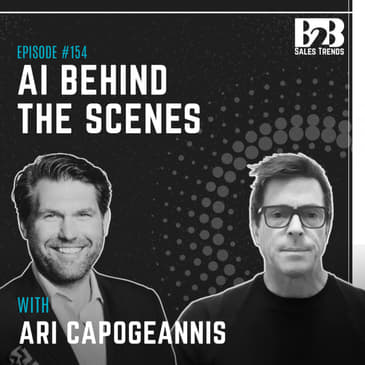
[00:00:33] My name is Harry and today's episode is about how do we move from data to deals? How do we enable sales with precision and not false promises? And our expert for today's session, I'm super, super pleased about is Ari Capogeannis. I hope I pronounced that right, Ari. It's a tough one. Ari Capogeannis.
[00:00:58] Thank you. And Ari is the Senior Director of Enterprise Revenue Marketing at NVIDIA. Welcome to B2B Sales Trends, broadcaster, Ari. Thank you so much. I'm happy to be here, Ari. To kick this off with, give us a little bit of an intro about yourself, your role and what's driving you on. Yeah, definitely. I lead enterprise revenue marketing here. It created the team at NVIDIA to champion data.
[00:01:25] For all our stakeholders across the traditionally siloed organization from B2C to B2B and developer, but selfishly to curate that data at a holistic level, to really gain a holistic view of the state of an account's relationship with us, wherever they may be, and all the cross-pollination within that account. My background coming into NVIDIA was running DemandGen and Insight Sales.
[00:01:48] And prior to that, a deep, deep love of the application of data, first and foremost into marketing, which often, you know, sort of viewed as discretionary spend due to misunderstanding of what that sales cycle really looks like and all the touch points therein. But championing that, not for the standpoint of showing that marketers provide value to the organization,
[00:02:13] but championing it to enable our sellers to be amazing and leverage data for the success of the organization. It's interesting. Let's stick with that topic and let's kick it off with that, because driving better go-to-market execution across the different business lines is really, really key, and quite honestly, something that everybody's struggling with, everybody that we talk to anyway. And you said right sort of at that intersection of marketing data and sales.
[00:02:40] So in your opinion, what helps to drive real execution across, you know, and you know that you guys are a large, super complex organization, especially when teams work so differently. So what drives that real execution and what makes a difference? Yeah, it's interesting. The real driver of success is enabling somebody to be amazing at what they do, where they work, without them having to learn something new, do something different.
[00:03:09] You know, if I have a seasoned seller, the last thing they run out here is I want you to go into these three new platforms we paid for, because there's all this wealth of data at your disposal. They barely go into Salesforce to input data from their conversations, right? We're lucky if we get that. They don't want to know how the soup's made. So on the deep, deep analysis and the tools we have and everything, the success really is, can I take something from that to nudge this individual or the aircraft carrier in the right direction,
[00:03:38] without them even really thinking about it? And that's really the goal. As complex the foundation and tech and the application of AI and the holistic level of data and what sounds like blah, blah, blah to my end stakeholder, all I want is for wherever they're working for them to know, oh, I'm going to put this foot forward today on this and not even think about it. Interesting.
[00:04:03] And helping sales teams really prioritize what matters, I guess, and sort of seeing through all the tools, all the different things, the data, and really get them to focus on what they need to be doing, you know, is challenging. And especially in that line, and I was just thinking about a conversation I had yesterday
[00:04:26] about how much data and stuff sellers have to do and are measured by and be held accountable to do and execute. What, in your opinion, leads to better decision-making because customer decision-making, should I say, because that's ultimately what we're after and ultimately that's what closes us deals and helps us progress. How do you make these insights more actionable, in your opinion? Yeah, definitely.
[00:04:55] I lump it into two key groups of sellers, right? I'll have a general account seller who typically might have, say, anywhere upwards in the larger org, 500 accounts in their patch. It's much more reactionary on average in that case. That person wakes up in the morning. They don't want to be told by a marketer or somebody outside their realm on what they should be doing, but you ask, how are you starting your day? You have 500 accounts. Are you just looking at your inbox?
[00:05:25] For that individual, the success is really in ranking those accounts based on all the soup that we have and be able to say, out of these 500 accounts, these two, without even explaining it, just reach out to these two and reach out to these individuals within that account. And the automation is going to blanket enable the rest of those people. The focus really is buying groups. Now we can get into that in a moment, but orchestration against buying groups, orchestration against the contacts that matter in our system.
[00:05:54] You know, backing up a little bit. A lot of people are still stuck in that quarter century old lead flow mentality of the funnel that somebody is going to come to your website in enterprise, click a bunch of things. They're going to go through this Dungeons and Dragons scoring that some marketer came up with that said, because you read a white paper, you're worth 50 points. And you're going to MQL, go to that individual because they own one of those 500 accounts. And supposedly that's going to create an opportunity.
[00:06:23] We know now that there are buying groups in play, starting with Forrester's analysis of on average, 50,000 for a deal size. Anything 50,000 and up, you're instantly at three people in the mix. As you get to 250,000, nine to 15 and beyond, including procurement, which people don't think about, they could kill the deal at some point in time. So at that point, when we want to enable our sellers, it's no longer this old school funnel view.
[00:06:51] It's how do I tell them one, what account that matters out of the 500 and what do they do? They'll say, who do I reach out to? And typically somebody will, here's everybody in the account. Or they only have in their view, the contacts, because most of us are operating on antiquated systems architectures that were built 20 to 25 years ago. That have disparate views. The leads are housed over here. When they do certain things, they convert and they become contacts over here. And that's what the sellers see.
[00:07:21] For orchestrating against a buying group, I want a profile map of, say, my executive, my team lead, my infrastructure, procurement, and practitioner. And out of that population, who are the most engaged individuals that this seller should be aware of, see, and execute against? Our systems architecture isn't set up that way. Everything I just said is way too complex for the seller.
[00:07:44] What I want for them to wake up, be told, WidgetCo is surging, reach out to this individual right now. Right. And gain their trust to do so, so they don't come back and say, I already have a contact at WidgetCo, this 300,000 person company that somehow this contact knows everything going on in that organization. That's one example for the general account.
[00:08:09] When we talk about named account managers, so one-to-one relationship or one-to-few, those individuals are very set in their ways. They're the ones that especially will say, well, I already know Joe at this 300,000 person organization. Joe would tell me if they needed something. That's great. But we want to enable them with information in pocket so that they can make the right decision. Usually, that decision is going to happen if they have the right data at their fingertips
[00:08:39] and aren't being told by somebody to do something. I want them to make the decision. I don't want to take credit for it. I don't care about credit. I just want somehow them to listen to this data that traditionally would come from marketing that they wouldn't listen to. The focus there for us really now is taking AI modeling and the like and producing intelligence briefs. When something happens with that account of note, I want them to be able to see everything going on. I don't want to bombard them.
[00:09:07] I don't want to send the notifications throughout the day every day. It gets lost in the noise. But I want them to know that this is everything Joe might not be seeing. Reach out to Joe. Ask Joe about this potential deal. And Sprinkle AI obviously bring that into the mix here. It's everywhere, right? And it's throughout all the different sales process and data is driven by and so forth.
[00:09:36] Because I think not everything that's out there through AI is shifting the needle or moves the needle. Where have you seen AI actually improve go-to-market efforts? And where do you think it falls short? Yeah, it's interesting. AI will make you exponentially better when applied towards something you have domain experience in.
[00:10:04] For my seller, it doesn't matter where I put a chat prompt. I put a chat prompt on the CRM that they're operating out of, the BI tool they have access to. But if they already don't use those tools, chances are they're not going to use the prompt. So for me, the success really is the application of AI to data at a holistic level in the back end. I'm not even telling them we're using AI. They don't care. They don't want to learn the word propensity. They want to learn any of that.
[00:10:34] All I want is the output to go into their realm, their safe space, what they're comfortable with and currently use, and just have everything order the way they need to have it ordered. And maybe some deeper detail there that matters to them. Right. Right. In our business, I don't know if you mentioned we're an AI-driven sales enablement play. And we've brought AI throughout all of our processes. And the content has always been great.
[00:11:02] But the scalability AI gives us when people practice skills and get instant coaching and all that stuff, it's pretty cool stuff. Pretty cool stuff. And it does help. Yeah. It's a muscle memory that needs training. Yeah. Yeah. I fully agree. And AI gives us the ability to train it, to train it every day. Not the traditional, okay, we have once a year workshop. But now I can train it literally every day like an athlete. They train every day and have a game on Saturday, right?
[00:11:32] Versus, so that's really cool. You know, I do strongly believe though that soft skill, if you want. And you mentioned procurement and the fact that there's 9 to 12 stakeholders now and 200K plus deals and so forth. You know, there are certain stakeholders that people are more comfortable and more drawn to in terms of a persona than others, right?
[00:11:59] Some people might want to talk more to, you know, the technical person versus the financial buyer. So how do you deal with your people having preference in who they engage with? Because with 9 to 15 people and your sales process, you need to be pretty damn good to engage with all of them at the same level. So how do you deal with that? The engagement is going to be different, right?
[00:12:27] So for the procurement and say the InfoSec individual that you're going to run into at some point in time, you want them at least aware of the initiative that's happening. Want them aware and trusting and seeing the value and what the offering is. So that's going to revolve around that omni channel experience push and go to market. It's not necessarily the seller talking to those individuals early on.
[00:12:52] It's having them as part of your omni channel play content wise. Right. When we look at that buying group, if we sanitize it down to four roles, again, let's say executive, team lead, infrastructure, practitioner. The first touch of a net new logo is first opportunity with you could be two to four years prior. Uh, so we have the ability now with AI in the soup to say, Hey, based on these activities,
[00:13:18] we have projected revenue maturation occurring over the next four years of X. If everything goes according to the plan, based on historic data that matches to this, that allows you to identify that first touch and that surge of this account where from a content perspective or a relationship building perspective with your seller, you can engage the right people that early on. Typically in the past, what's happened is we've marketing's gone and bought intent from
[00:13:48] intent data providers. And let's say this account is surging without context. And the recommendation is send all these surging accounts to sales and sales turns the stink eye to marketing going, God dang it again. Come on. It's bad as leads. Um, the surging was accurate, but what was missing was the context. And the context is provided when you get all that data cohesive at a holistic level analyzed,
[00:14:15] and then you add in the propensity to say, Hey, it is surging, but it's surging because of early interest in this thing. We just announced they have propensity to engage. So propensity to engage is important. Um, but it's different than say, when you identify the full buying group engaging and there's propensity to buy at that point. But again, the seller doesn't need to know that they just need to know who to talk to and when, uh, and why. Yeah.
[00:14:46] I've, we've done some research on decision-making. I'm curious of, of getting your take on this. Um, done some research on decision-making and, and, and it says that people really, or buyers make decisions one out of two reasons, right? Either to gain an outcome from whatever you can offer me or to avoid a risk that I'm facing.
[00:15:09] Um, if your seller can't have either of those conversations with me, the urgency is just not enough for me to move off the status or the current situation because change is difficult. It's pain in my backside. I don't want to do it. So the outcome must be strong enough or the risk avoidance must be strong enough. Do you agree with that? And what's your take on that? Absolutely.
[00:15:35] I was, uh, you know, Ian Howells, my CMO at, when I was at Intact, you know, drilled it into us as robotic positioning. Uh, often you'll go look at somebody's web main feature graphic or the top of a product page and it just lists that we build this widget and somehow you want this widget. Um, but the importance is, is conveying to that individual that, um, non-profit, you know,
[00:16:04] CFOs cut time to close by X percent by blah, blah, blah, blah, blah, blah. So you've come around back from it going, oh my gosh, these are people like me. This is the pain point. Closing's horrible. If I were able to cut close by this amount of time, I would save this much money. Uh, the seller has to be, has to come out at similar and, and, and enable you not hammering it towards you, obviously your relationship building, but in that relationship building,
[00:16:30] it's like, Hey, uh, this, this looks like something you'd be interested in. Uh, this could really help you. Right. Um, and, and then connect the really good use case to it and, uh, and then really message the outcomes and, uh, outcomes impact value as we, uh, we always refer to it. It's interesting. Um, so, so we train a lot of, you know, salespeople and so forth.
[00:16:58] And, and I always face the issue when customers tell us, oh, well, you know, we have a win rates issue and we're just going to put the enterprise salespeople through it or these people and let's, let's ignore everybody else. You know, and, and when we talk through our, um, uh, prequel a couple of weeks ago, you mentioned the importance of the execution of the strategy at the point where it matters most, right?
[00:17:25] At the, at the, the base of, at the point of customer interface. How do you make sure when, when you need your strategy to be executed at that point? How do you make sure there is a consistent action across the different teams, the different markets, especially obviously, you know, go enterprises, but you gotta have everybody contributing to that. Everybody's speaking the same language, everybody having the same mindset and skillset.
[00:17:55] What's your experience with that? And how do you execute that at the top level? My experience with that is like playing whack-a-mole. I don't know if you're aware of that old game, where moles would pop up in the arcade and you had to hit it with a hammer over and over. Um, in a small org, it's actually much easier, right? Especially with the automation orchestration tools we have in play today. Um, there are plenty of vendors out there where in the end, I can create this omni-channel
[00:18:23] experience where it says, if you're this role at this stage with this propensity, I want this to happen out of my marketing automation platform. I want this trigger in my CRM. Um, whether it's propensity to engage two to four years out from opportunity or identifying this buying center. And then the buying centers here. And I want the roles in the buying center close to a decision to be aware of this product offering. So I'm going to trigger banner ads around that. That's all doable automation wise.
[00:18:50] As the org gets bigger and bigger, every one of those pieces is owned by a different team. One within marketing. And then as the org gets bigger and bigger in very siloed groups between sales over here and marketing over here. Right. And maybe in the super large enterprise, the view that marketing is just brand and events and we do all the selling over here, which completely kneecaps you as far as understanding that, that four year relation building. Huge.
[00:19:19] So yeah, it's, um, it's from our team standpoint in, in the champion of data, that holistic level being in the large organization, we're really nudging the aircraft carrier because we don't own the execution of those pieces at that point. And what you do is you lead with the data. It's much, there are certain groups where it's much easier to get an ear there. And there's other groups where you just keep sprinkling and sprinkling and then slowly you're affecting change, but it's very difficult. Right. Interesting.
[00:19:49] Absolutely doable. Very difficult in the larger org. Tough, very tough in a large organization. Exactly. I agree. Um, are you, you've seen many salespeople, some, uh, come and go. I was going to say, uh, we're almost at the end of our time together and, uh, Really already? That's terrible. If we should extend this. Uh, we should, uh, open to do a second episode, uh, part two, because, uh, I feel like there's such a wealth of knowledge, uh, there to be tapped into.
[00:20:18] The last question I always ask on every podcast is, uh, in your opinion, if you want to be an elite seller in the future, what are the top qualities that you need to possess to be, to be an elite salesperson? What would those three be? The best salespeople I've come across are the ones that have that human element. Where they don't even feel like salespeople, they're relationship building.
[00:20:46] They're a friend, uh, that you've known for X amount of time. So when that nudge towards that selling motion happens, it doesn't feel anywhere near a cold call or a push or anything like that. It's it, I trust this individual. They're a friend of mine. I know them well. Um, and you learn that. Amazing. Have you learned that? How are you born with that? Can you learn that human element? I honestly think you can, to a degree.
[00:21:16] Yeah. I think the really, really VIP diamonds in the rough are born with it. That's the, that's at that level where you hear the phrase marketers and sellers are chemically different at their core. Uh, and then within the sellers, the VIP individuals, the ones that, that shine, say from a, you might have an SDR team doing calls for eight months after eight months, most of them burn out. And then there's a couple of individuals that are rock stars and those people go on to,
[00:21:43] to be those individuals to, to, then some of those people go on to become those people that are really good at relationship building versus just a push. Yeah. How about number two? So the human element, the trust piece to create that report quickly is key. What about number two? Number two would be an affinity for data.
[00:22:06] Um, at this point now, I don't mean being a, a data scientist, but being open to embracing the, the application of data we have today. Again, it doesn't mean diving into a BI tool. It means you need to be open to things like intelligence briefs that AI at a holistic data level can provide you. Now the fact that no, Joe doesn't know everything going on his organization and you have to be
[00:22:32] open to that brief versus I'm gonna have cocktails with this guy in a month and he'll tell me everything going on then. Yeah, absolutely. And then connected that, that data first with the human element. That's a pretty cool combo. Uh, how about number three? What's, uh, the third, uh, top quality that super elite salesperson needs to possess? A feedback mechanism.
[00:23:00] So from a data perspective, one of the biggest gaps we have is that, that circle back. Okay. We identify this count as propensity. We, I, we did all the things. Um, this seller had a meeting or conversation or cocktails and in analyzing what's working and what's not, we now have a black hole. We just, we don't know why things are falling off. And it turns out in all the conversations or 40% of the conversations, people don't like
[00:23:29] this one thing, if they're not coming back, which many often don't, they don't put in call notes or anything like that. Um, we don't know, and we can't pivot accordingly and we can't fill the gap and we can't tweak that omni channel experience that's going on right now to, to adequately address that pain point that's come up. That feedback loop's important. And a lot of them don't want to spend the time I'm, I'm doing my thing. And, and what I do is what matters. Yeah.
[00:23:59] And especially goes back to all these stakeholders. You, you gotta be operating in, in a team environment for that. It's really critical to be able to share and receive constructive feedback. Absolutely. No matter how much the automate, what we talked about earlier, no matter how much you automate that, that seller's conversation is the one thing that knows if something needs to pivot in the machine. Right. Very interesting.
[00:24:23] And the whole, the whole purpose also of, of this, uh, this podcast and our way to get that rich knowledge out to people is the human element is still extremely important. It just drives us. I think the, the AI and everything's around it and data drives us to just be at an elite level. And, uh, what is it that we can do and how can we progress to, to nudge forward?
[00:24:53] And that's, if you have that mindset, that's key. Absolutely. And, and to your point, we, we have that ability with some technology. We do pull sentiment and things like that for calls that are recorded. And we try to do the best around the automation of that, but the seller really knows exactly what's going on in the mindset of the people they're talking to. And that depth of, of input is absolutely required for success. Yeah. Couldn't agree more with you. Lovely people. You've heard it here first for Mari. You have to have a human element.
[00:25:22] You have to have a drive to understand and use the data as well as a really good feedback mechanism on the inside and outside. Ari, thank you. I know our listeners very, very much appreciate your insights and your thought leadership. Thank you for your time. Thank you. Pleasure. Well, lovely people calls to action for you. Go to the b2bsalestrends.com podcast, subscribe to it, share this or any other episode with
[00:25:52] people who you want to improve and want to progress as well as go to YouTube channel, b2bsalestrends.com podcast and like it and share it and do whatever it says to do that. Go to globalperformancegroup.com. Also, if you want to compare your industry win rates with your current ones and get some insights on that.
[00:26:16] Until the next episode, look after yourself, look after your loved ones and of course, your B2B customers. Bye-bye.