
[00:00:05] Welcome to B2B Sales Trends, the podcast dedicated to sales leaders in the B2B space, where we share conversations about innovative and successful sales transformations to keep you up to date on the latest trends. This podcast is brought to you by Global Performance Group.
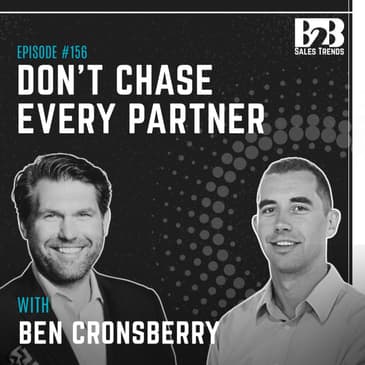
[00:00:22] Welcome here to another fabulous episode of the B2B Sales Trends podcast, my lovely people. The show that brings you hacks, tips, thought leadership to the topic of B2B selling. My name is Harry and today's episode is going to be fabulous. It's about or with, shall I say, Ben Cronsberry. Ben is the go-to-market operations leader or lead, should I say, at Shopify.
[00:00:50] Welcome to the B2B Sales Trends podcast, Ben. Thanks for hosting me, Harry. Fabulous. Thank you for making time. Ben, as to kick this off, give us a bit of an introduction about yourself, your role. That will be great. Yeah, for sure. So I'm Ben. I'm based in Toronto, Canada. Been in software now for about 13, 14 years, primarily in sales and partnerships.
[00:01:14] And my role here with Shopify, I work closely with our sellers and sales teams, but also with product, partnerships, finance, and all the other stakeholders internally. And it's basically like a liaison between the frontline revenue teams and all of the kind of back office functions within the org.
[00:01:37] Thank you for that introduction. That's great. Ben, we always talk about the fact that buying has changed and dramatically in the last few years, if I may add to that. And, you know, warm referrals seems to be more important than ever and needs to seem to matter more than ever, should I say, right?
[00:02:00] What role do partnerships play in helping sales teams really reach better qualified and, you know, higher converting buyers in your opinion? Yeah, I think there's a few things there. So first off, just having that relationship and trust with their current, you know, customer portfolio or longstanding relationships, I think really helps break down that, you know, credibility and just kind of fear of meeting new folks.
[00:02:29] So we find that, yes, both the responsiveness of a warm referral along with the conversion rates are much stronger and healthier. But then also the speed to close is also something that benefits from a referral versus a cold outreach or an inbound lead that hasn't been vetted or qualified yet. So there's kind of multiple benefits to this throughout the sales cycle.
[00:02:57] But certainly we're seeing a shift from, you know, your traditional outbounding cold calling to more of a partner led ecosystem approach. I love that. It's something that a lot of people are struggling with that typical approach of getting leads that it just doesn't work anymore. Right. You don't get any responses and so forth. So talk to me a little bit.
[00:03:21] And we had a pre-call on this and it was very interesting hearing you talk about that, about sort of designing or coming up with a partner program that really works. Right. And not all partners contribute equally. Right. Right. In your experience, what makes a really good and really strong partner program? And how do you prioritize which partners are worth investing in? Yeah, I think that approach needs to start with the definition.
[00:03:50] So figuring out what are your kind of segments or categories of potential partners that you'd like to engage with. And I typically would boil these down to three main buckets. Your first is going to be more of your commercial revenue play. Simply sharing leads, introducing each other and really just helping with that network effect. Your second would be more of your product partners.
[00:04:16] So folks that you've got integrations that you've built out with or, you know, have some sort of complementary value from a product perspective. They're also going to eventually lead to those warm referrals and revenue recognition. But I would say this is more of a value add from a product or functionality standpoint. And then your third might just be folks in the industry that are thought leaders, are well connected.
[00:04:43] Think of consultants or freelancers that might have been a prior customer or a prior partner and are now kind of, you know, a mercenary of sorts working with many different types of players throughout the industry. Those, again, will be more of your commercial or revenue type referrals, but they're not so much, you know, selling software or really directly competing against your suite of solutions or any of your competitors.
[00:05:13] They're more of a neutral party. So once those kind of definitions are loosely in place, you'll need to go through your portfolio and Rolodex to figure out, okay, well, which ones are going to have the most overlap with us in terms of ICP? And then from there, who do you have the strongest relationships with? Who are the most responsive?
[00:05:35] Who have provided the most referrals or integration support if it's a product partner in the past? And you can begin to almost like stack rank them. You could even create like a scorecard with some weighted averages if you want to get into a quantifiable metric for this. But essentially, I would recommend setting up maybe three to five different tiers of partners. And from there, that's where you're going to be prioritizing.
[00:06:03] So spending your most amount of your time on the gold or tier one partners and then so on and so forth through the three or five other players. Interesting. And, you know, you mentioned the partner enablement and there's so much that can go wrong with that. And there's a number of things you need to do in order to get that right.
[00:06:30] And what does good partner enablement in your opinion look like? And then, you know, how do you make sure your partners are really, you know, setting that right expectations with prospects? Yeah, this one is a tricky thing to really perfect, I would say. But just to share some kind of best practices and tips, I think might help.
[00:06:56] So first off, you need to create enablement that's going to relate and be absorbed by your partner. But keep in mind, it's not just about your product or solution. It's also who is that on the other end of the line? Is it a sales rep? Is it a customer success manager? Is it a support group?
[00:07:17] There are different personas in your partners that you need to figure out what's the right messaging for their day-to-day roles with their customers that you hope get referred to you. So in other words, a sales rep might just be caring about, you know, what are some of those business case outcomes that can help drive positive ROI for our customer.
[00:07:38] Whereas maybe a support or MSM is more to do with, you know, getting rid of inefficiencies or current pains, more tactical level, you know, objectives. So creating the right enablement content towards that type of messaging is really, really important. And then from there, you're right. There's a risk of having the partner misposition something or over promise something because it's a little foreign to them, right?
[00:08:08] It's external to their business. So I think the key there is just keeping things simple and keeping them high level. Your team's going to be the experts in terms of all the nuance and, you know, intricacies of the solution you're selling. So all you need to get that referral is really the high level talking points nailed down. So clear and concise is kind of the silver bullet there I would strive towards. Right.
[00:08:34] Get them, you know, 20% of the way and then the other 80% your team can handle because you're the true expert and specialist. Right. And I would imagine there is some, you know, there's a behavioral side of any partner relationship. There usually is a behavioral side to any relationship really. And I would think that partnerships are more often more personal and less predictable than direct sales. Right.
[00:09:04] What, and you've done this for quite a long time now. What have you learned about keeping these relationships productive and, you know, in a way mutually beneficial, of course, because it's got to be something in it for them too. Yeah. No, totally. Totally. I think the way to convey this type messaging too, that I forgot to mention earlier, that might be helpful, helpful is storytelling.
[00:09:28] So how have you, or your company or solutions helped another customer that might be like some of the customers that your partner is serving. And I think using that social evidence and commercial education is really, really powerful.
[00:09:46] You know, everyone can start flouting, you know, all these SLA numbers or ROI projections, but hearing the story in terms of how that customer achieved that through your solution, I think is the more important thing to highlight. And so vice versa, when you're working with your partners, understanding their customer stories and the value that they're driving, how they're driving it. And what was that current state compared to the future state?
[00:10:14] I think it's going to help you as well to bring them the right leads and the ones that resonate with that potential use case. Right, right, right. And, you know, you mentioned storytelling. I've heard you tell quite a couple of cool stories in the lead up to this. Tell us the secret in, you know, what are the two or three things that people need to, you know, consider and think about when they tell a good story?
[00:10:43] What is a good story there for you? This might sound counterintuitive, but I think storytelling begins with listening. You first need to listen to the other person, the potential customer or the partner to understand what they're going through. And then what you can do is relate to them by telling a story. Because if you leave with the storytelling, you're just kind of throwing stuff at the wall, shooting in the dark, seeing if it sticks.
[00:11:10] And yeah, it might work sometimes, but in other times it's going to go right over their head and you might lose credibility. And that might hurt, you know, a future conversation. So to me, it's got to be strategic. You need to make sure what their challenges are, what pain they're going through, where they're willing to invest and make changes. And then apply the stories that might be similar to that, you know, same problem that they're going through.
[00:11:40] So it's all connecting the dots, I would say. And that takes a little bit of, you know, experience. And you might go through some mistakes or failed storytelling. But over time, you'll build an intuition towards that. So that's kind of what I coach the reps on is it all starts with the right discovery and really figuring out what matters to your buyer. Love it. Love it.
[00:12:08] Let's go back to the partner topic that we've explored a little bit so far. You know, obviously there are incentives, but we also have to have impact, right? So beyond stuff like revenue sharing, commissions, I don't know exactly what the model looks like. It's not noisy. Good topic to discuss here.
[00:12:32] But beyond commissions or revenue shares and so forth, what other sort of levers have you seen work well in keeping partners engaged and driving really value for both sides? What have you seen that work? Yeah, I'll give you one example that I think is becoming more and more prevalent in the last couple of years.
[00:12:51] And that's these social types of events where you might hold a, you know, private or intimate dinner with your partner, some of their customers, some of yours to create this almost like safe space of, yeah, sharing successes, sharing challenges. But then also just deepening relationships.
[00:13:12] And I feel like this is becoming more and more common versus your kind of old school way of showing up at a conference, setting up a booth, hoping folks come by and trying to pitch them and sell them on something. So by having these types of social networking events, I really find this is a flywheel. And if you start inviting some partners and they get a lot out of the events you're holding, you're going to start getting invitation to theirs.
[00:13:39] And it kind of just becomes like a domino effect of you open one door that leads to 10 more and exponentially you're growing your network and adding more customers to your portfolio. Nice. Nice. Nice. Nice. And I'm curious about your advice here. So let's assume, you know, you're a sales leader right now and you want to start building, you know, that sort of partner led approach that you have described.
[00:14:08] You know, what's one very common mistake or misstep, should I say that people should avoid? And what's the one thing that they should absolutely get right? So one to avoid, one to get right. When you're building that partner led approach, what do you think? I think mine is going to answer both. And the key to me is patience.
[00:14:32] I think sometimes folks, you know, meet a partner or meet someone at a conference, whatever, and they think it's going to immediately lead to all these referrals and all these new logos. And it takes time, right? You really need to build out that rapport and really prove your worth and start small.
[00:14:56] And so, you know, it's obviously frustrating when you're not getting the responses or, you know, the revenue recognition. But I do urge folks to just be patient, see what happens and just continue to meet people. I think that's the key because if you get your name out there, you start talking to different associations, join these different events that I had mentioned.
[00:15:22] That's going to slowly lead to, you know, more and more referrals and revenue recognized. So, yeah, it does take time. It's not this like, you know, flip a switch and, you know, there's a big influx of inbound leads. It is a bit of a time-staking and patient approach. You know, it's interesting. Everybody always wants these relationships, but nobody has the patience to really invest in them and nurture them.
[00:15:51] And everybody thinks, oh, you know, drop them an email, have one call, and then we have a relationship. Yeah, it doesn't, I mean, patience is not my strong suit, I have to say. But it just takes what it takes to create these relationships. And I fully agree for what it's worth. And on the flip side, it's you don't want to boil the ocean either, right?
[00:16:16] You can't go partner with every other software company in the industry or in your region. So you really do need to be strategic in terms of where you're putting your time and energy. And I would, you know, start small with how I refer that sniper approach versus spraying a shotgun and, you know, going after everyone.
[00:16:36] So that's also a key consideration is have patience, but then also try to stack rank and prioritize within those buckets of which partners that you want to invest in. Because time is money and you need to be smart with the time you're allocated. Absolutely. Absolutely.
[00:16:56] Ben, we're almost out of time, but the last question I always ask on every podcast is, what do you think, you know, the top three skills of successful reps are these days? You know, there's AI everywhere and everybody thinks now that AI fixes everything that's wrong with sales.
[00:17:16] And I think more and more people will find out again that, yes, AI can support a lot of things in the process, but it still takes salespeople really to be at an elite level in terms of their skill level, in terms of their engagements, in terms of how they create these relationships. And we strongly believe that there's, you know, behaviors and skills necessary to do that.
[00:17:41] But what, in your opinion, are the top three skills that successful reps need to possess in nowadays, day and age? Yep. I mentioned one a little earlier. I'm going to start there because it's typically at the start of the sales cycle and that's discovery. I do see a big difference in discovery skill sets across reps and across teams that I've been on.
[00:18:04] And typically the top performing reps are the ones who have the best discovery procedures and kind of approaches. So that one to me is kind of a deal breaker. If you don't do good discovery, it's really going to hurt you down the line. The second is having empathy for your customer. So really understanding their business, their challenges and potential solutions that would fit to their operation, I think is also key.
[00:18:34] If you don't and can't relate to your end buyer, you're really going to struggle getting them to adopt your solutions. Right. And then the third I'd find is, and this is a little more in the enterprise or more complex deal sizes, is working internally to help solve different challenges that the buyer is going through.
[00:18:56] Whether you have a product gap that has not been addressed by your solution yet, working internally with engineering product, the solution architects, all the different stakeholders internally, that takes a bit of skill and expertise as well. A lot of people think, well, sales is just on the front lines, talking to customers externally.
[00:19:17] I think the best sales reps, yes, do that well, but also internally are really good at project managing, making the ask or request really clear for all of the other stakeholders and leadership folks that we need to come together and have that team-based selling.
[00:19:37] Anytime you're in that complex deal cycle that's extremely long with a lot of different approvers on your customer side, I think also reflectively internally, you need to have that same structure. Right, right. I want to dig into one of them. So discovery, empathy, and basically collaborating and work internally to make the customer team work basically effectively.
[00:20:02] I want to dig into the first one because there's a lot of, it's obviously a hot topic, the discovery piece. And you mentioned there is a difference in approaches, some work better, some work less. Share a little bit your thoughts on that with us, if you would. Well, I think discovery starts even before you pick up the phone and get on a call with that customer. Right. It starts with the call prep. And that typically leverages data, right?
[00:20:31] And so obviously AI is being used more and more to really find out a lot of information. So when you get to that call with the customer, you already know their business inside and out. I think that shows really well and builds that trust exponentially fast versus coming in cold, asking them some basic questions that you could have done in advance. So it really helps accelerate that whole process.
[00:20:59] And then once you're in, you know, the real time call, it's really quantifying the pain and seeing what types of behaviors or actions the buyer has done in the past to resolve that pain. Sometimes they haven't done anything or tried anything. Sometimes they have the pain, but they don't want to spend any money to solve for it.
[00:21:20] So really understanding that route to then decide, hey, is this one worth me going down a long sales cycle to eventually get that contract signed? Or should I try to cut bait and get out of the sales cycle and maybe circle back with them in six months without wasting all the cycles for both you and your internal stakeholders?
[00:21:42] We had a really cool round table the other day and we were discussing win rates and one of the participants was talking about qualifying and opportunity and how important discovery is in this. And then another participant really nicely said, well, I would take this a step further. Qualifying is as important as disqualifying, right? So which opportunities are we disqualifying easy? And discovery is part of that too.
[00:22:13] It's an interesting take, I thought. It is, yeah. Losing fast, I call that. And had a mentor tell me once, there's two winners in every sales cycle. There's a sales rep who gets to sign contract and then there's a sales rep who gets out first. Yeah, right. And if you can be either of two, then you're going to be focusing your time on, you know, the buyers that will be realizing that revenue from. Right, right, right. That's a great final word.
[00:22:42] Ben, thank you. I know our listeners very much appreciate your insights, your thought leadership and what you brought to the table today. Thank you for your time. Thanks for having me, Harry. Nice meeting you. And yeah, look forward to watching future episodes. Absolutely. My lovely people, two calls to action for you.
[00:23:02] Go to the B2BsalesTrends.com site, share, subscribe, share with people who may want to listen to this episode and you thought Ben's insights were fabulous and they need to hear that too. Or go to the B2BsalesTrends podcast YouTube channel, subscribe and like it. If you do, that will be fabulous. And until the next episode, look after yourself, look after your loved ones and of course your B2B customers. Thank you.